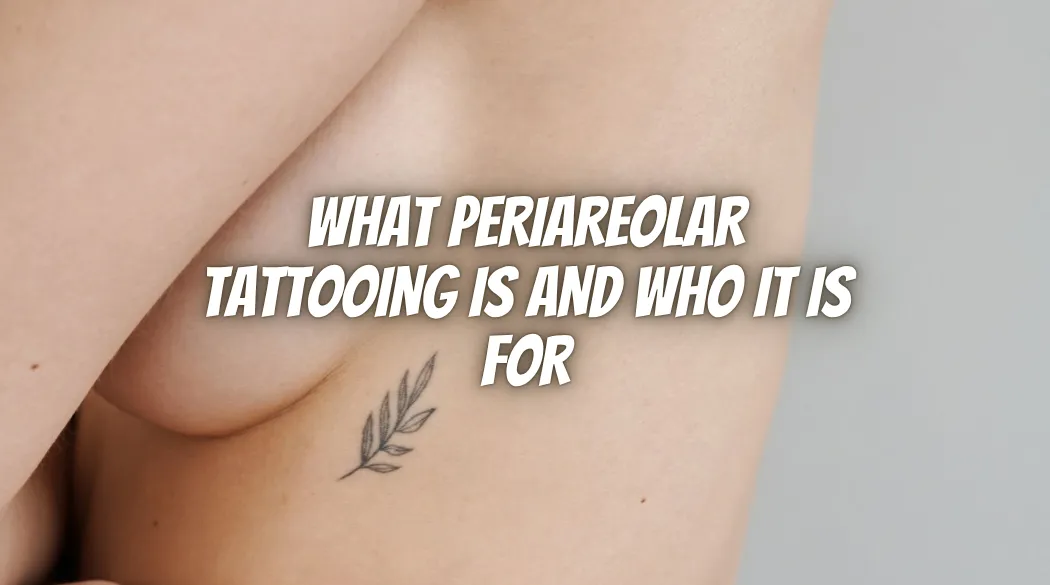
What Periareolar Tattooing Is and Who It Is For
Periareolar tattooing, also called nipple-areola tattooing, is a specialized form of cosmetic and restorative tattooing that recreates the appearance of the areola and nipple. It is most often used by breast cancer survivors after reconstruction.
At Ink Different Tattoos, we train aspiring Tattoo Artists in the precision and compassion this work demands, and one of our Master Mentors, Kara Gutierrez, specializes in it. This guide covers what the specialty is, who it serves, and how you could build a career around it.
Key Takeaways
Definition: Periareolar tattooing, also called nipple-areola tattooing, recreates the look of the areola and nipple using realistic shading and color techniques.
Who it serves: Primarily breast cancer survivors after reconstruction, people who have had gender-affirming surgery, and those seeking cosmetic enhancement.
Core skills: Advanced color theory, 3D shading, precise symmetry, steady machine control, and deep knowledge of scar tissue.
Expert insight: Master Mentor Kara Gutierrez says scar tissue demands more humility than confidence, and she trains only experienced Tattoo Artists for this work.
Career impact: Deeply human, AI-proof work that pairs technical mastery with meaningful client impact.
How to start: A structured 18 to 24 month tattoo apprenticeship builds the foundation before you specialize in restorative techniques.
What Is Periareolar Tattooing?
Periareolar tattooing is a restorative and cosmetic tattoo technique that uses pigment, shading, and color to recreate a lifelike areola and nipple, frequently for people who have undergone breast reconstruction.
After reconstructive surgery, the area often lacks the natural color, dimension, and texture it once had. A skilled Tattoo Artist uses careful color blending and three-dimensional shading to make a flat surface look round and natural.
This work sits at the intersection of art and medicine. It is about subtlety, realism, and restoring something personal, not flash or bold statements. For the person in the chair, the result can be deeply affirming.
Who Is Periareolar Tattooing For?
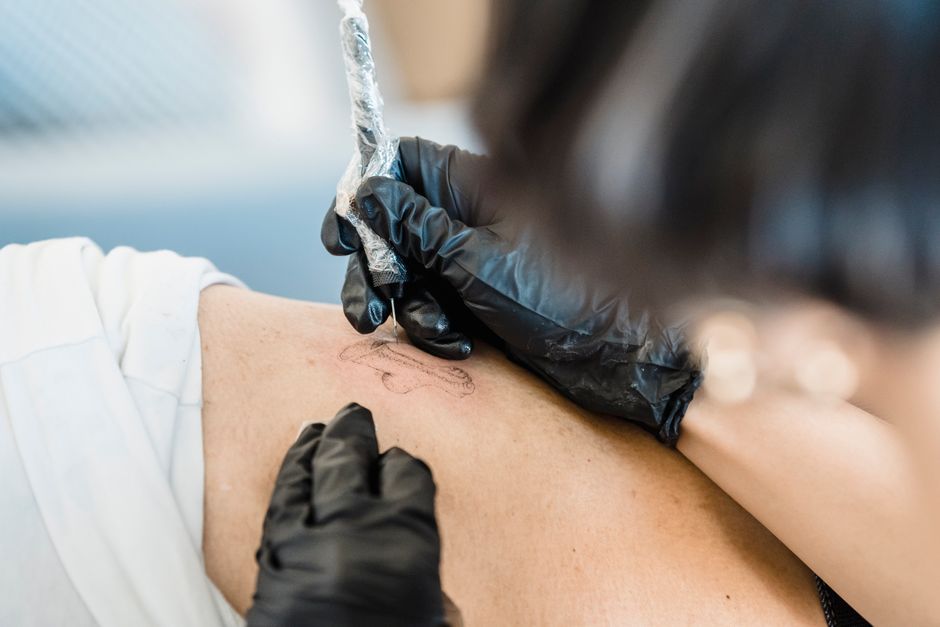
Periareolar tattooing is primarily for breast cancer survivors after reconstruction, people who have had gender-affirming surgery, and anyone seeking a natural-looking cosmetic enhancement of the areola.
The most common clients are survivors who have completed reconstructive surgery and want the finishing touch that makes the result feel complete. Aftercare matters for these clients, and the American Academy of Dermatology tattoo care guidelines are a trusted reference for healing.
Kara Gutierrez, an Ink Different Master Mentor based in Kansas City, works with breast cancer survivors, burn survivors, people who have had gender-affirming surgery, and others with chest scars.
This specialty may be right for you as a Tattoo Artist if you are drawn to meaningful, people-first work that asks for patience, skill, and empathy.
How Does the Periareolar Tattooing Process Work?
The periareolar tattooing process typically happens in planned stages: consultation, color matching, outlining, layered shading, and healing with follow-up sessions to refine the final result.
Here is a simplified look at how a session commonly unfolds. Each step builds on the one before.
Step One: Consultation. You discuss goals, review medical clearance, and assess the skin and any scar tissue.
Step Two: Color matching. You blend pigments to match skin tone and create a believable, natural hue.
Step Three: Mapping and outlining. You map the placement and size so both sides appear balanced and symmetrical.
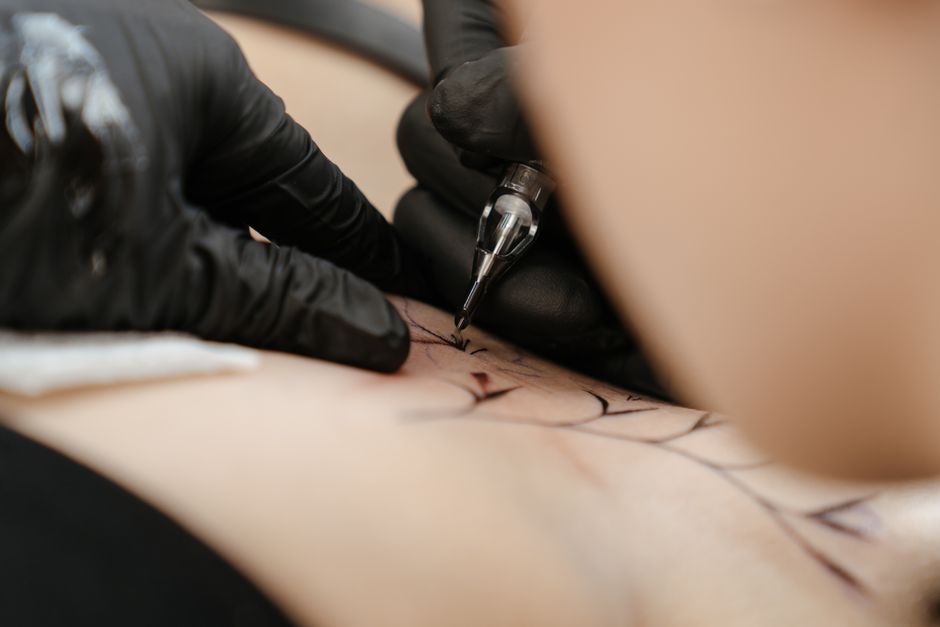
Step Four: Layered shading. You apply gradual shading with a tattoo machine to create the illusion of depth and dimension.
Step Five: Healing and follow-up. Most clients need at least two sessions, with healing time between them, so you can refine color and detail.
Pro Tip: Restorative tattooing often requires a touch-up because healed pigment can soften. Setting that expectation early builds trust with your client.
What Skills Does a Periareolar Tattoo Artist Need?
A periareolar Tattoo Artist needs advanced color theory, realistic 3D shading, precise symmetry, steady machine control, and a deep understanding of skin and scar tissue.
This is not entry-level work, which is why it rewards those who put in the training. The difference between a flat, unconvincing result and a lifelike one comes down to mastery of light, shadow, and pigment behavior.
Here are the core skills this specialty demands:
Color blending: Matching diverse skin tones so the result looks natural in all lighting.
Dimensional shading: Creating the optical illusion of roundness on a flat surface.
Scar-aware technique: Adjusting pressure and approach for reconstructed or sensitive skin.
Client communication: Guiding people through an emotional experience with calm confidence.
Kara Gutierrez, who has spent nearly 15 years in tattooing, puts the mindset plainly: scar tissue demands more humility than confidence. If the skin is not taking more pigment, forcing it will not help.
Placement is also not one-size-fits-all. In a study of 104 patients with bilateral implant-based reconstruction who chose the size and position of their 3D nipple-areola tattoo, women tended to prefer a smaller areola positioned higher on the chest than classic values. Preferences may also vary with factors like implant size and BMI. Listening during the consultation matters as much as technique.
These skills are built, not born. Even if you have never picked up a tattoo machine, the right Tattoo Artist training gives you a foundation.
Why Does Safety Matter So Much in This Specialty?
Safety matters intensely in periareolar tattooing because clients often have compromised or healing skin, making strict hygiene and bloodborne pathogen control non-negotiable.
When you work on reconstructed tissue, your standards have to be higher than high. The OSHA bloodborne pathogen standards set the baseline for sanitation, cross-contamination prevention, and proper disposal that every professional must follow.
In one study of 62 Japanese breast reconstruction patients tattooed with sterilized inorganic pigments, no patient reported infections or allergic reactions. It was a small study, and it is not a guarantee. It does show what careful, sterile technique can support.
This is where formal training separates professionals from hobbyists. Understanding skin anatomy, infection control, and proper equipment handling protects your clients and your reputation. A great Mentor drills these habits into you until they are second nature.
Why Is Periareolar Tattooing a Meaningful Career Path?
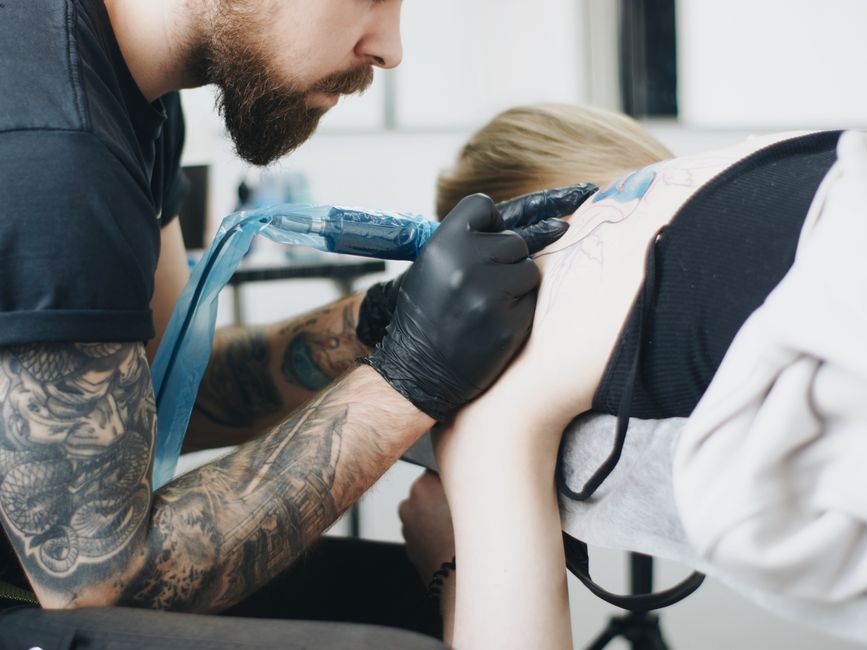
Periareolar tattooing is a meaningful, AI-proof career because it combines irreplaceable human empathy with hands-on technical craft that no machine can replicate.
A robot cannot sit with a survivor, read the emotion in the room, and adjust its touch to a human story. That is why skilled tattooing endures.
The outcomes can matter to clients. In that same Japanese survey, 59 of 62 patients said they were satisfied, and 19 reported improved mental health after the procedure. Another study found that sexual well-being scores improved significantly after nipple-areola tattooing.
The Bureau of Labor Statistics tracks craft and fine artists as a recognized field. Specializing in restorative tattooing is one way to stand out within it. Tattoo apprenticeships are a serious college alternative for people who want hands-on skill and real purpose.
How Do You Learn Periareolar and Specialty Tattooing?
You learn periareolar and specialty tattooing by first mastering tattoo fundamentals through a structured tattoo apprenticeship, then developing advanced shading and color skills under an experienced Mentor.
Nobody starts with restorative work on day one. You build a strong foundation first: line work, shading, color theory, sanitation, and machine control. Then you layer specialty techniques on top.
Kara Gutierrez is direct about this: areola restoration is not an entry point. She started with a traditional tattoo apprenticeship and now tattoos one to four areolas a day. She looks for Tattoo Artists who already know their machine and needles and can tattoo realism. With that foundation, she believes she can get someone ready in about 12 months, and she takes only one or two a year.
If you are new, start with a tattoo apprenticeship, build your realism drawing skills, and practice decorative tattoos over scars, which are more forgiving than areola work.
Get Serious About Your Tattoo Career With Ink Different Tattoos
Ink Different Tattoos offers a structured Traditional Tattoo Apprenticeship that turns beginners into job-ready professionals through live, in-person mentorship over 18 to 24 months.
We have spent 15 years training professional Tattoo Artists across the country since our founding in 2011. Our nationwide tattoo apprenticeship is built on a “Good Humans” culture, where you join a supportive, family-like community that has your back from your first drawing to your first client.
What You Can Expect from Our Traditional Tattoo Apprenticeship
Our four-phase Traditional Tattoo Apprenticeship is designed for real-world results, even if you have zero experience:
Length: 18 to 24 months of personalized, hands-on Tattoo Artist training.
Structure: You train in professional tattoo studios alongside experienced Mentors.
Beginner-friendly: No prior art experience required. We teach the fundamentals from the ground up.
Job-ready outcome: You graduate with real skills, licensing support, and a guaranteed job offer at one of our tattoo studios.
A Career That Comes With Confidence
You graduate with job-ready training, licensing support, and a guaranteed job offer at one of our tattoo studios, so you can work professionally. Licensing rules vary by state, so we help you navigate the specifics, whether that is learning how to get your tattoo license in Texas, how long a tattoo license takes in Colorado, or transferring a tattoo license to California.
Mentorship That Pushes Your Brand and Skills Further
Ready to specialize or grow your career? Our one-year, in-person Master Mentorship pairs you with celebrity and award-winning Mentors like Al Fliction, Liz Cook, Kyle Dunbar, Boneface, and Jordi Pla. It is built for beginners and experienced artists who want to master a style, build a brand, or own a tattoo studio.
Making Tattoo Training Accessible for Everyone
Ink Different operates nationwide, with the Traditional Tattoo Apprenticeship available in 60+ locations, including Spanish-speaking locations in Denver, Orange County, NYC, Miami, San Antonio, and San Diego, so language is never a barrier to your future.
Ready to Become a Tattoo Artist?
If this work speaks to you, the first step is learning to tattoo. Seats in our tattoo apprenticeship are limited, because real mentorship cannot be mass-produced.
Ready to become a tattoo artist? Apply now to Ink Different's Traditional Tattoo Apprenticeship and start building an AI-proof career with licensing support along the way. Not sure yet? Fill out our quick questionnaire to get personalized support and find out if the Traditional Tattoo Apprenticeship is right for you.
Frequently Asked Questions
What is periareolar tattooing used for?
Periareolar tattooing recreates the natural look of the areola and nipple. It is most often used by breast cancer survivors after reconstruction and by those seeking cosmetic enhancement.
How do you become a periareolar Tattoo Artist?
Start with a tattoo apprenticeship to build fundamentals. Ink Different Master Mentor Kara Gutierrez says areola restoration is not an entry point. She looks for Tattoo Artists who already know their machine and needles and can tattoo realism, and she trains only one or two a year.
Do I need art experience to learn specialty tattooing?
No. Ink Different’s Traditional Tattoo Apprenticeship is built for beginners and teaches drawing, shading, and color fundamentals from day one before you ever specialize in restorative work.
How long does it take to become a Tattoo Artist?
Ink Different’s Traditional Tattoo Apprenticeship takes 18 to 24 months across four phases of hands-on training in professional tattoo studios, with licensing support.
What makes Ink Different different from other training options?
Ink Different offers live, in-person mentorship, 15 years of experience, access to award-winning Mentors, and a “Good Humans” community as a college alternative.
Where can I do a tattoo apprenticeship near me?
Ink Different operates nationwide, with the Traditional Tattoo Apprenticeship available in 60+ locations, including Spanish-speaking locations in Denver, Orange County, NYC, Miami, San Antonio, and San Diego.