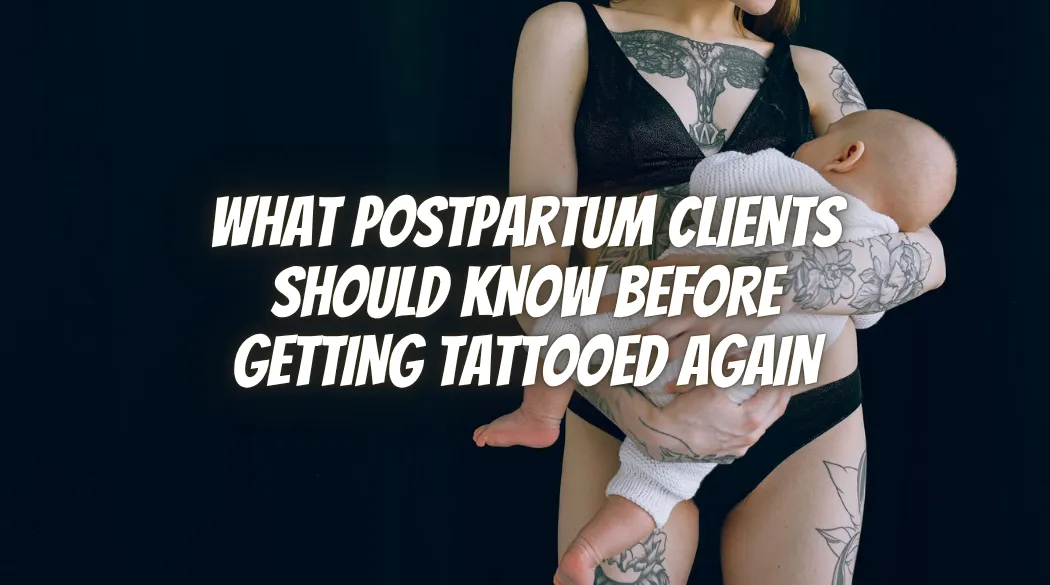
What Postpartum Clients Should Know Before Getting Tattooed Again
Postpartum tattooing is the practice of getting tattooed after childbirth, once your body has healed enough to handle the skin trauma and immune response that fresh ink requires. For many new parents, a tattoo is a way to reconnect with themselves or mark a milestone, but timing and preparation matter more than they did before. At Ink Different Tattoos, we want you walking in informed and confident. This guide covers how long to wait, how pregnancy changes your skin, and what to know about breastfeeding before you book. It is general information, not medical advice, so talk with your doctor before you schedule.
Key Takeaways
Timing: There is no single universal rule. Many providers suggest waiting several months after birth, and many suggest waiting until you have finished breastfeeding.
Skin changes: Pregnancy alters elasticity, pigmentation, and stretched areas, which can affect how a tattoo settles and heals.
Breastfeeding: Research on tattooing while breastfeeding is lacking, and many Tattoo Artists decline to tattoo nursing clients as a precaution.
Consult first: Clear new tattoos with your doctor and choose a licensed, hygienic tattoo studio.
Career path: If you love tattooing, Ink Different’s Traditional Tattoo Apprenticeship is an 18 to 24 month path for beginners.
What does postpartum tattooing actually mean?
Postpartum tattooing means getting a new tattoo during the months following childbirth, a window when your body is still recovering and recalibrating after pregnancy. It is not a medical procedure, but your body treats fresh ink like a controlled wound.
After you give birth, your hormones, immune system, and skin are all in transition. Getting tattooed before your body is ready can lead to uneven healing or a result that does not match what you envisioned.
Tattoos are common among women in the age range when many people start families. According to Pew Research Center, 38% of U.S. women have at least one tattoo, including 53% of women ages 30 to 49.
This does not mean you can never get tattooed again. It means timing and preparation matter more than they did before you were a parent. A little patience now protects the final result.

How long should you wait after giving birth to get tattooed?
There is no single universal rule. Many doctors and Tattoo Artists suggest waiting several months after childbirth, and many suggest waiting until you have finished breastfeeding, so personal guidance from your doctor matters.
Your body needs time to return to a stable baseline. Hormone levels shift after birth and can affect skin pigmentation and healing speed. Giving yourself a buffer reduces the risk of complications and disappointing results.
If you had a cesarean birth or any complications, your recovery timeline may be longer. Recovery is individual, so follow your own provider’s advice rather than a generic calendar.
Pro Tip: Bring up your tattoo plans at a postpartum checkup. Your doctor can flag anything specific to your recovery before you book.
Why does your skin behave differently after pregnancy?
Pregnancy stretches the skin, shifts pigmentation, and changes elasticity, which means a tattoo placed on recently stretched areas may settle or distort as your body continues to change.
Areas like the abdomen, hips, and chest often experience the most stretching. If you tattoo there before your skin finishes recovering, the design can warp as your body changes over the following months. Stable areas like forearms, calves, and shoulders tend to hold ink more predictably.
Hormonal changes can also cause temporary hyperpigmentation, which may affect how colors read on your skin. Many clients find that waiting a few extra months gives them a more accurate preview of how the finished piece will look.
What should breastfeeding clients know before getting inked?
Many Tattoo Artists and health experts advise waiting until you have finished breastfeeding. There is no research on the safety of tattooing while breastfeeding, so this is a precaution, not a proven danger.
The Breastfeeding Network notes that no research is available on the safety of getting a tattoo while breastfeeding, and it is usually recommended that mothers wait until breastfeeding has ended. Some experts consider it generally safe, while others say the evidence is simply lacking, so ask your doctor or lactation consultant.
The main concerns are infection and treatment. If you developed an infection or an allergic reaction, the treatment you needed might not be compatible with nursing or could affect your milk supply. It is also unknown whether tattoo ink could ever reach breast milk as it slowly breaks down over time.
Strong hygiene standards, like the OSHA bloodborne pathogen standards, lower infection risk but do not remove every variable. A responsible Tattoo Artist will ask whether you are nursing and may recommend rescheduling. If someone brushes that question aside, treat it as a red flag about their professionalism.
How can you prepare for your first postpartum tattoo?
Preparing for your first postpartum tattoo means getting medical clearance, choosing a licensed tattoo studio, timing your session around childcare, and prioritizing hydration and rest. A little planning turns a stressful appointment into a restorative one.
Follow these steps to set yourself up for a smooth experience:
Step One: Get your doctor’s green light. Confirm your body has healed and you are not on any medications that affect bleeding or immunity.
Step Two: Choose a licensed, reputable tattoo studio. Verify local licensing and read reviews. Hygiene is non-negotiable.
Step Three: Plan your childcare. Book enough coverage so you are not rushing or stressed during the session.
Step Four: Hydrate and eat well. Well-nourished skin takes ink better, and a full stomach keeps you steady during longer sessions.
Step Five: Follow aftercare precisely. Use guidance from your artist and trusted sources like the American Academy of Dermatology tattoo care guidelines.
Treat this appointment as self-care, not just a transaction. You have earned a few hours that belong entirely to you.
What should Tattoo Artists understand about postpartum clients?
Great Tattoo Artists understand that postpartum clients need extra empathy, clear health screening questions, and honest conversations about timing and placement. This is where real training separates professionals from hobbyists.
A skilled Mentor teaches you to ask the right intake questions, recognize when a client should wait, and adapt placement advice for changing skin. These judgment calls come from live, in-person guidance, not from a weekend workshop.
Meaning matters too. According to Pew Research Center, 73% of tattooed women say honoring or remembering someone or something was a reason they got tattooed, compared with 63% of men. Many postpartum clients come in to mark their child, their journey, or their own reclaimed sense of self, so listening to the story is part of the craft.
Understanding the human side of tattooing is exactly what makes a Tattoo Artist unforgettable. For more on avoiding rookie errors, read our guide on the mistakes aspiring tattoo apprentices should avoid.
How can you turn this passion into a career?
You can turn your love of tattooing into a career through a structured tattoo apprenticeship that teaches you drawing, machine handling, hygiene, and client care under experienced Mentors. No prior art degree is required.
If you are reading this as someone in a job that leaves your creativity unused, a tattoo apprenticeship gives you a structured way to change that. Many people find that parenthood clarifies what matters to them.
Tattooing is a deeply human craft, which makes it one of the few careers that automation cannot replace. A machine cannot hold space for a new parent reclaiming their body with meaningful ink.
If you're curious why this matters long term, see why tattoo artists are still essential. And if you're weighing your options against a traditional path, explore how tattoo apprenticeships work as a college alternative.
What to expect from our Traditional Tattoo Apprenticeship
Ink Different’s Traditional Tattoo Apprenticeship is an 18 to 24 month, four-phase tattoo apprenticeship that takes you from complete beginner to job-ready Tattoo Artist with licensing support. We have trained professionals for over 15 years.
Founded in 2011, Ink Different Tattoos is a nationwide college alternative built for aspiring artists who pursue excellence. You train hands-on in our tattoo studios alongside experienced Mentors. The training is personalized, so beginners with no formal art background are welcome from day one.
A career that comes with confidence
By the time you complete all four phases, you will have job-ready skills, licensing support, and a guaranteed job offer at one of our tattoo studios, so you can step into the industry prepared rather than guessing. The Bureau of Labor Statistics tracks craft and fine artists as a recognized field.
Mentorship that pushes your brand and skills further
If you want to accelerate or master a specific style, our one-year, in-person Master Mentorship connects you with celebrity and award-winning Mentors including Al Fliction, Liz Cook, Kyle Dunbar, Boneface, and Jordi Pla. It is built for both beginners and experienced artists aiming for career growth and business ownership.
Making tattoo training accessible for everyone
Ink Different operates nationwide, with the Traditional Tattoo Apprenticeship available in 60+ locations, including Spanish-speaking locations in Denver, Orange County, NYC, Miami, San Antonio, and San Diego, so language is never a barrier to excellence. Wherever you start, you join a supportive, family-like community grounded in our Good Humans culture. You are never doing this alone.
Remember: Seats in our Tattoo Apprenticeship Program are limited because mentorship is personal.

Ready to become a Tattoo Artist?
Whether you are a postpartum client getting ready to reclaim your skin or someone who has realized this craft could be your calling, the first step is the same: make the decision. If you are exploring motivation and timing, our post on making a career change through a tattoo apprenticeship is a great next read.
Ready to become a Tattoo Artist? Apply now to Ink Different’s Traditional Tattoo Apprenticeship and start building an AI-proof career with licensing support along the way. Prefer to test the waters first? Fill out our quick questionnaire to get personalized support and find out if the Traditional Tattoo Apprenticeship is right for you.
Frequently Asked Questions
How long after giving birth can I get a tattoo?
There is no single universal rule. Many experts suggest waiting at least several months after childbirth, and until you finish breastfeeding. Recovery is individual, so confirm timing with your own doctor first.
Is it safe to get a tattoo while breastfeeding?
There is no research on the safety of tattooing while breastfeeding. Many Tattoo Artists decline to tattoo nursing clients as a precaution, because of infection and treatment concerns, and many experts recommend waiting until you have stopped breastfeeding.
Will pregnancy change how my tattoo looks?
Possibly. Pregnancy stretches skin and shifts pigmentation, especially on the abdomen and hips. Tattoos placed before your skin stabilizes can distort as your body continues recovering.
Do I need prior art experience to become a Tattoo Artist?
No. Ink Different’s Traditional Tattoo Apprenticeship is built for beginners and teaches drawing, machine handling, and client care from day one under experienced Mentors.
How long does the Ink Different Tattoo Apprenticeship take?
The Traditional Tattoo Apprenticeship takes 18 to 24 months across four phases of hands-on training in our tattoo studios, with licensing support.
What makes Ink Different different from a tattoo course?
Ink Different offers live, in-person mentorship, over 15 years of experience, licensing support, and a supportive Good Humans community. It is a college alternative built on hands-on training.