What Scalp Tattooing Is and How It Differs From Hair Tattooing
Scalp tattooing is a specialized tattoo technique that deposits pigment into the scalp to replicate the look of hair follicles, cover scars, or place artistic designs on the head. The term covers two very different practices, and people often confuse them. At Ink Different Tattoos, we train aspiring Tattoo Artists to understand niches like this from the ground up. This guide explains how scalp tattooing differs from hair tattooing and what it takes to do the work well.
Key Takeaways
Definition: Scalp tattooing places pigment on the head to mimic hair follicles, cover scars, or create artistic designs.
Key difference: Hair tattooing (scalp micropigmentation) imitates shaved hair. Decorative scalp tattoos are artistic expressions on the head.
Who it helps: People with alopecia, thinning hair, or scars, and those wanting bold head designs.
Skill level: Scalp work demands advanced precision, so you need strong foundational training before specializing.
Where to learn: Ink Different’s Traditional Tattoo Apprenticeship builds job-ready skills with licensing support in 18 to 24 months.
What is scalp tattooing?
Scalp tattooing is the practice of depositing ink or pigment into the skin of the head, either to create decorative artwork or to simulate the appearance of hair follicles. It covers two very different worlds under one umbrella term.
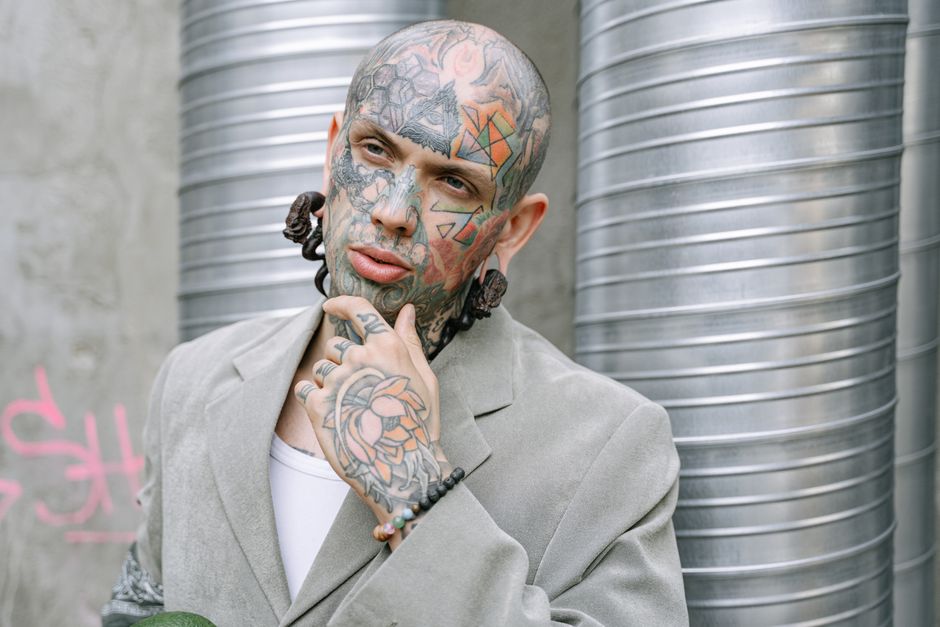
On one side are decorative scalp tattoos: bold designs, patterns, or lettering placed directly on a shaved head as personal expression. These are traditional tattoos that happen to live on the scalp.
On the other side are cosmetic techniques designed to mimic natural hair. That second category is where most of the confusion starts, and it is what people usually mean when they say “hair tattooing.”
How does scalp tattooing differ from hair tattooing?
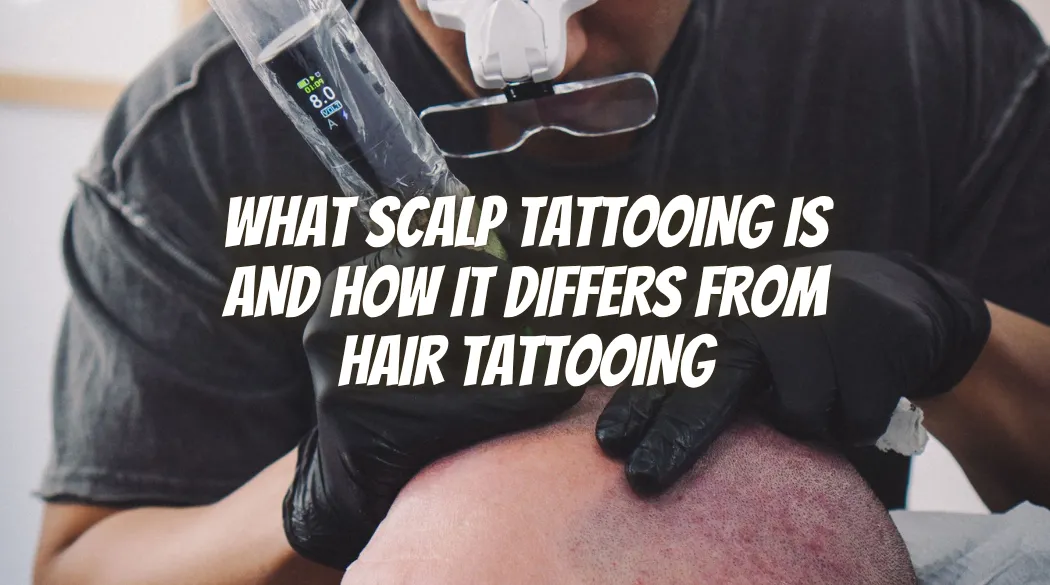
Hair tattooing, known as scalp micropigmentation (SMP), uses tiny pigment dots to replicate shaved hair follicles. Scalp tattooing is the broader term for any tattoo placed on the head, including full artistic designs and decorative work.
All hair tattooing happens on the scalp, but not all scalp tattooing is hair tattooing. The intent is what sets them apart.
Hair tattooing (SMP): The goal is realism. The artist creates thousands of microscopic dots to mimic a buzzed hairline or to add density to thinning areas.
Decorative scalp tattooing: The goal is expression. The artist places line work, shading, or color as a visible piece of art.
Technique: SMP uses a stippling, dot-based approach, while decorative work uses standard tattoo methods and machine handling.
Longevity: Many providers describe SMP as semi-permanent, with gradual fading over time, while decorative tattoos are designed to be permanent.
Understanding this distinction is the kind of knowledge that separates a hobbyist from a true professional. When a client asks you the difference, your answer should land with confidence.
How does scalp micropigmentation actually work?
Scalp micropigmentation works by inserting tiny deposits of pigment into the upper layers of the scalp skin to create the illusion of individual hair follicles across the head, with precision and consistency.
SMP is typically placed in the upper layers of the skin so the dots stay crisp and small. Precision matters, because a dot placed too deep can blur and spread over time, ruining the illusion.
How does scalp micropigmentation build realistic results step-by-step?
Step One: Consultation. The artist reviews the client’s hair loss pattern, skin tone, and desired hairline shape to plan a natural design.
Step Two: Hairline design. A natural, age-appropriate hairline is mapped out before any pigment touches skin.
Step Three: Pigment matching. The artist mixes a pigment shade that blends with the client’s natural or stubbled hair.
Step Four: First session dotting. Light, spaced dots are applied to build a base layer without overcommitting to density.
Step Five: Layering sessions. Over several appointments, density is gradually built for a realistic, seamless finish.
Step Six: Aftercare and touch-ups. The client follows a healing protocol, and the artist refines the result as needed over the following weeks.
Pro Tip: Patience is a professional skill. Rushing density in a single session is one of the most common mistakes new artists make, and one of the hardest to correct later.
Who gets scalp tattooing done?
Scalp tattooing serves people experiencing hair loss or thinning, those covering scars or burns, and individuals who want bold, expressive designs on a shaved head as a form of self-expression and confidence.
People living with conditions like alopecia or male and female pattern baldness often seek SMP to restore the look of a full hairline without surgery. Others pursue decorative scalp work purely for artistic and personal reasons.
The market reflects that demand. According to Precedence Research, the global scalp micropigmentation services market was valued at USD 2.80 billion in 2025 and is projected to reach about USD 5.16 billion by 2035. The same report projects freelance SMP artists and independent studios to be the fastest-growing provider segment. These are projections from a market research firm, not guarantees.

What skills do you need to master scalp work?
Mastering scalp tattooing requires rock-solid machine control, consistent needle depth, color theory for pigment matching, anatomical knowledge of the scalp, and the stamina to maintain precision across long, detailed sessions.
Scalp work is an advanced specialty. You do not start here. You start with the fundamentals, then grow into niches like this once your foundation is strong and your hands have logged hundreds of hours on basic techniques.
The core skills you will need to build include:
Line work and dot consistency: Every mark must be uniform, especially for SMP, where even slight variations break the illusion.
Depth control: You must know how deep to go without causing blowouts or scarring.
Color theory and pigment chemistry: Pigment choices must age naturally, account for skin tone variation, and avoid turning green or muddy over time.
Client communication: You are often working with people navigating emotional situations around appearance, hair loss, or scars.
Anatomical knowledge: Understanding scalp blood supply and hair growth patterns helps prevent complications and improves results.
Skill gaps show up in the research. In a retrospective study of 120 patients who needed corrective procedures after unsatisfactory SMP, 89.2% had been treated at a tattooing or cosmetic facility at a beauty salon performing permanent makeup. The authors note that improperly performed SMP is very difficult to correct, and the fixes included laser tattoo removal, repeat SMP, and hair transplant surgery to conceal the pigment. The study does not show how common poor outcomes are, but it shows how hard they are to fix.
Why does safety matter so much in scalp tattooing?
Safety is non-negotiable in scalp tattooing because you are breaking the skin barrier on a highly vascular area, which carries real risks of infection, scarring, and cross-contamination if proper protocols are not followed.
Every professional Tattoo Artist must understand bloodborne pathogen safety and sterilization. The OSHA bloodborne pathogen standards exist because working with skin and blood demands strict hygiene, single-use needles, and autoclave sterilization of reusable equipment. The scalp has a rich blood supply, which is one more reason strict hygiene matters.
Aftercare is equally critical, especially on an area as exposed and frequently touched as the head. Guidelines like the American Academy of Dermatology tattoo care guidelines help clients heal cleanly and protect your work from infection. A career built on safety is built to last, and it is the foundation of client trust.
Where can you learn scalp and advanced tattooing?
You can learn scalp tattooing and every other specialty by first mastering the fundamentals through a structured, in-person tattoo apprenticeship with live mentorship from experienced Tattoo Artists who have logged thousands of hours.
You cannot shortcut this. Scalp work sits at the far end of a journey that begins with the basics: drawing, line work, machine handling, safety protocols, and skin anatomy. Artists who skip ahead without that foundation often struggle to work professionally.
That is where Ink Different Tattoos comes in. We have spent the last 15 years, since 2011, training aspiring Tattoo Artists to pursue excellence and build careers that matter. We are a college alternative for people who are ready to build something real.
Remember: A tattoo machine is a tool, and tattooing is a craft that no algorithm can replicate. The Bureau of Labor Statistics tracks craft and fine artists as a recognized field.
What to expect from the Traditional Tattoo Apprenticeship
Ink Different’s Traditional Tattoo Apprenticeship is an 18 to 24 month, four-phase tattoo apprenticeship that takes you from complete beginner to job-ready Tattoo Artist with mentorship, community support, and real-world tattoo studio experience.
You train hands-on in real tattoo studios, learning from Mentors who have walked this path and understand what it takes to succeed. No prior art experience is required, because we teach you the fundamentals from the first day: drawing, line work, shading, color theory, machine handling, safety, and the business side of tattooing.
What career comes with confidence through Ink Different?
Our Traditional Tattoo Apprenticeship focuses on building job-ready skills and guiding you through licensing requirements in your state. You graduate with a guaranteed job offer at one of our tattoo studios, so you walk away ready to work professionally, not guessing your next move.
How do you specialize and scale with Master Mentorship?
Ready to specialize in a niche like scalp work, cover-ups, or a signature style? Our Master Mentorship is a one-year, in-person training track with celebrity and award-winning Mentors including Al Fliction, Liz Cook, Kyle Dunbar, Boneface, and Jordi Pla. It is built for mastering a specific style, building your reputation, or launching your own business.
Why does language accessibility matter in tattoo training?
Ink Different operates nationwide, with the Traditional Tattoo Apprenticeship available in 60+ locations, including Spanish-speaking locations in Denver, Orange County, NYC, Miami, San Antonio, and San Diego, so language is never the thing standing between you and your calling. We believe tattoo training should be accessible to everyone who has the passion and commitment.
Seats in our tattoo apprenticeship are limited, because real mentorship cannot be mass-produced. We keep our circle tight so every apprentice gets the attention they deserve, surrounded by our “Good Humans” culture and a family-like community.
Ready to Become a Tattoo Artist?
Specialties like scalp work grow from a strong foundation. If you are ready to build one, the first step is applying.
Ready to become a Tattoo Artist? Apply now to Ink Different's Traditional Tattoo Apprenticeship and start building an AI-proof career with licensing support along the way. Prefer to test the waters first? Fill out our quick questionnaire to get personalized support and find out if the Traditional Tattoo Apprenticeship is right for you.
Frequently Asked Questions
Is scalp tattooing the same as hair tattooing?
No. Hair tattooing, or scalp micropigmentation, mimics shaved hair follicles using dots. Scalp tattooing broadly includes any tattoo on the head, including decorative artistic work.
Do I need prior experience to learn advanced tattooing like scalp work?
No prior experience is required. Ink Different’s Traditional Tattoo Apprenticeship teaches fundamentals from day one, and specialties like scalp work build on that foundation.
How long does the Traditional Tattoo Apprenticeship take?
The Traditional Tattoo Apprenticeship takes 18 to 24 months across four phases of hands-on training in real tattoo studios, with licensing support and mentorship throughout.
What makes Ink Different different from other tattoo training options?
Ink Different offers live, in-person mentorship from award-winning Mentors, a 15-year track record since 2011, a “Good Humans” culture, and a true college alternative for serious aspiring artists.
Is scalp micropigmentation permanent?
Many providers describe scalp micropigmentation as semi-permanent. Because the pigment sits in the upper layers of skin, it fades gradually over time and often needs touch-ups to maintain its appearance.
Can I train in Spanish?
Yes. Ink Different operates nationwide, with the Traditional Tattoo Apprenticeship available in 60+ locations, including Spanish-speaking locations in Denver, Orange County, NYC, Miami, San Antonio, and San Diego.