What Tattoo Clients Should Know About AI Copyright Issues
Your Tattoo Deserves Originality, Not a Legal Headache
AI-generated art is everywhere right now. You see it on social media, in design apps, and honestly, it has started making its way into tattoo studios, too. Some people love how fast it can produce ideas. Others are starting to ask harder questions, like who actually owns that image, and what happens when you permanently ink it on your body.
Most tattoo clients do not think about copyright when they pick a design. That makes total sense because you are focused on the art, the placement, and how it will look when it heals. But AI-generated tattoo designs come with a whole set of complications that are worth knowing about before you commit.
Here, we’ll walk you through what is actually going on with AI art and copyright, and what it means for your tattoo specifically.
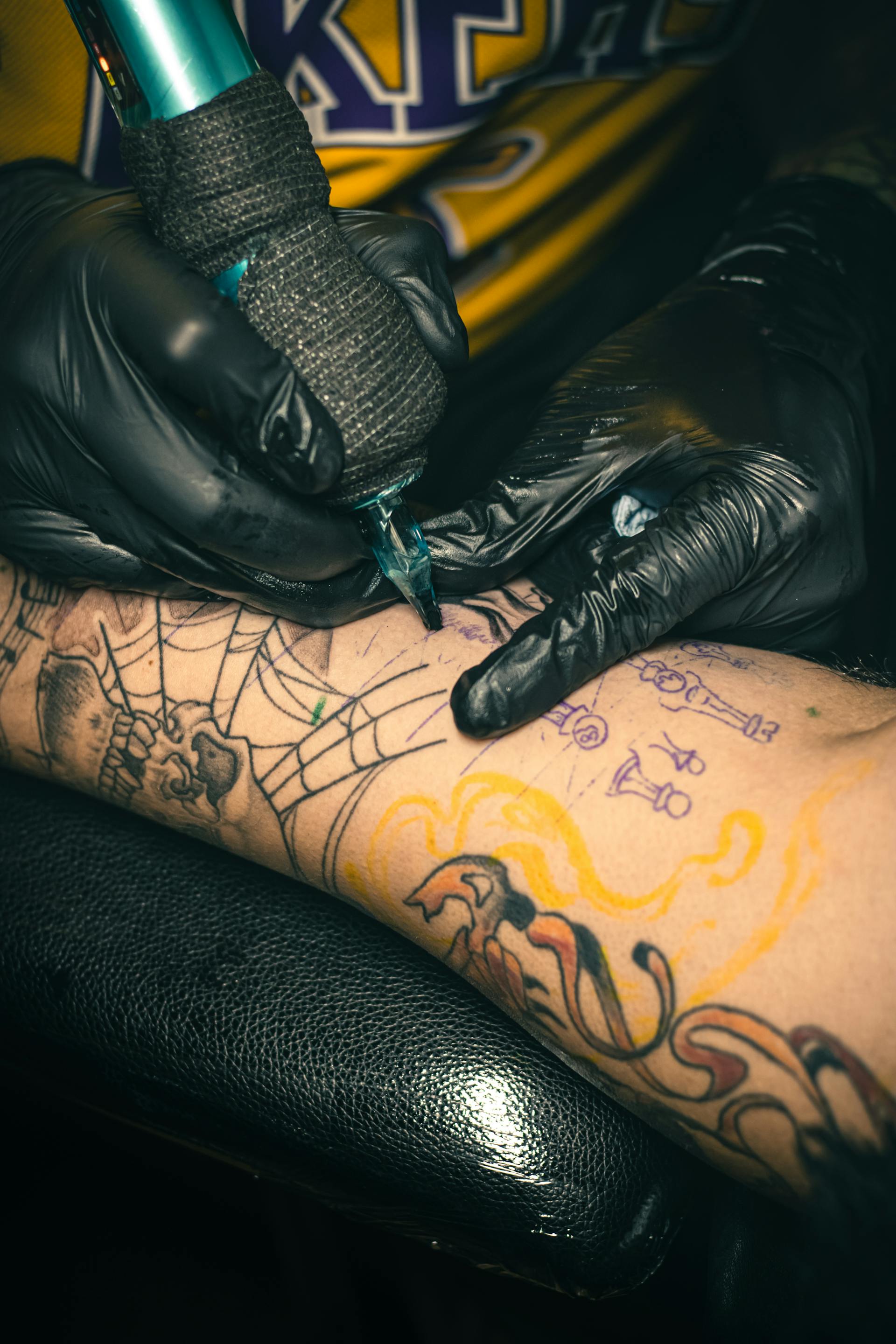
AI Art Is Showing Up in Tattoo Studios More Than You Think
AI image generators like Midjourney, DALL-E, and Stable Diffusion have made it incredibly easy to produce detailed, stylized artwork in seconds. Some Tattoo Artists use these tools to brainstorm concepts or show clients a rough visual direction. And on the client side, people show up to consultations with AI-generated images, hoping to use them as references or even exact designs.
The scale of this is honestly staggering. Over 34 million AI images are generated every single day, and more than 15 billion have been created since 2022. That is a flood of images with no clear ownership, no named creator, and no legal protection. When those images end up in tattoo studios, things get complicated fast.
Who Actually Owns an AI-Generated Design?
This is where it gets really interesting, and a little surprising. In the United States, the Copyright Office has made it clear that AI-generated images cannot be copyrighted if a human did not meaningfully create them. Copyright law requires human authorship, and an image spat out by an algorithm does not meet that standard.
The most well-known case on this is Thaler v. Perlmutter. A computer scientist named Dr. Stephen Thaler built an AI system he called the "Creativity Machine." This generated an image on its own called "A Recent Entrance to Paradise." He tried to register copyright for it, listing the AI as the author. The Copyright Office refused. The courts backed that decision, and on March 2, 2026, the Supreme Court denied the final appeal without comment.
Here is what that ruling means in plain terms:
An AI cannot be listed as a copyright owner because it is not a person.
Images created entirely by AI with no meaningful human creative input are not protected by copyright.
If you use an AI-generated design, nobody legally owns it. Not you, not the Tattoo Artist, not the AI company.
That also means anyone else can use the same design freely, including on their skin.
That last point is the one most people do not consider. No ownership means no exclusivity.
So, What Does This Mean for Your Tattoo?
A lot, actually. Since AI-generated designs cannot be copyrighted, they exist in a kind of legal no-man's-land. The design you think is unique to you is technically available to anyone.
That "one-of-a-kind" wolf in a geometric frame or watercolor floral sleeve you found online could already be tattooed on hundreds of other people. You would never know.
There is also a deeper issue. Many AI image generators learned to produce art by scraping the work of human Tattoo Artists without asking permission. So, say, a client brings in an AI image inspired by a specific tattoo style. That image may have been built on someone else's creative work without their knowledge or consent. Getting that tattooed on your body means you could unknowingly be carrying a version of stolen art. And that is a conversation worth having before you sit in the chair.
The "Style Scraping" Problem: When AI Learns From Human Tattoo Artists
AI image generators do not create from nothing. They learn by analyzing billions of existing images. And many of which were created by human artists who never agreed to have their work used as training data. Tattoo Artists who spent years developing a signature style found that same style being replicated by an algorithm, with no credit and no compensation.
This has led to actual legal battles. In 2023, a class-action lawsuit was filed in U.S. District Court against Stability AI, Midjourney, Runway AI, and DeviantArt. The plaintiffs, a group of prominent artists, alleged that these companies trained their AI models on billions of copyrighted images scraped from the internet without permission. These caused serious harm to artists' livelihoods.
Here is a quick breakdown of what the lawsuit claimed:
Billions of images were scraped from the internet and used to train AI without the creators' consent.
Artists received no payment, credit, or opt-out option.
The resulting AI tools can now generate art that closely mimics specific artists' styles.
This directly harms artists financially by replacing demand for their original work.
As a tattoo client, this is worth caring about. Supporting tattoo studios that rely on human creativity means supporting the Tattoo Artists who built the styles you love in the first place.
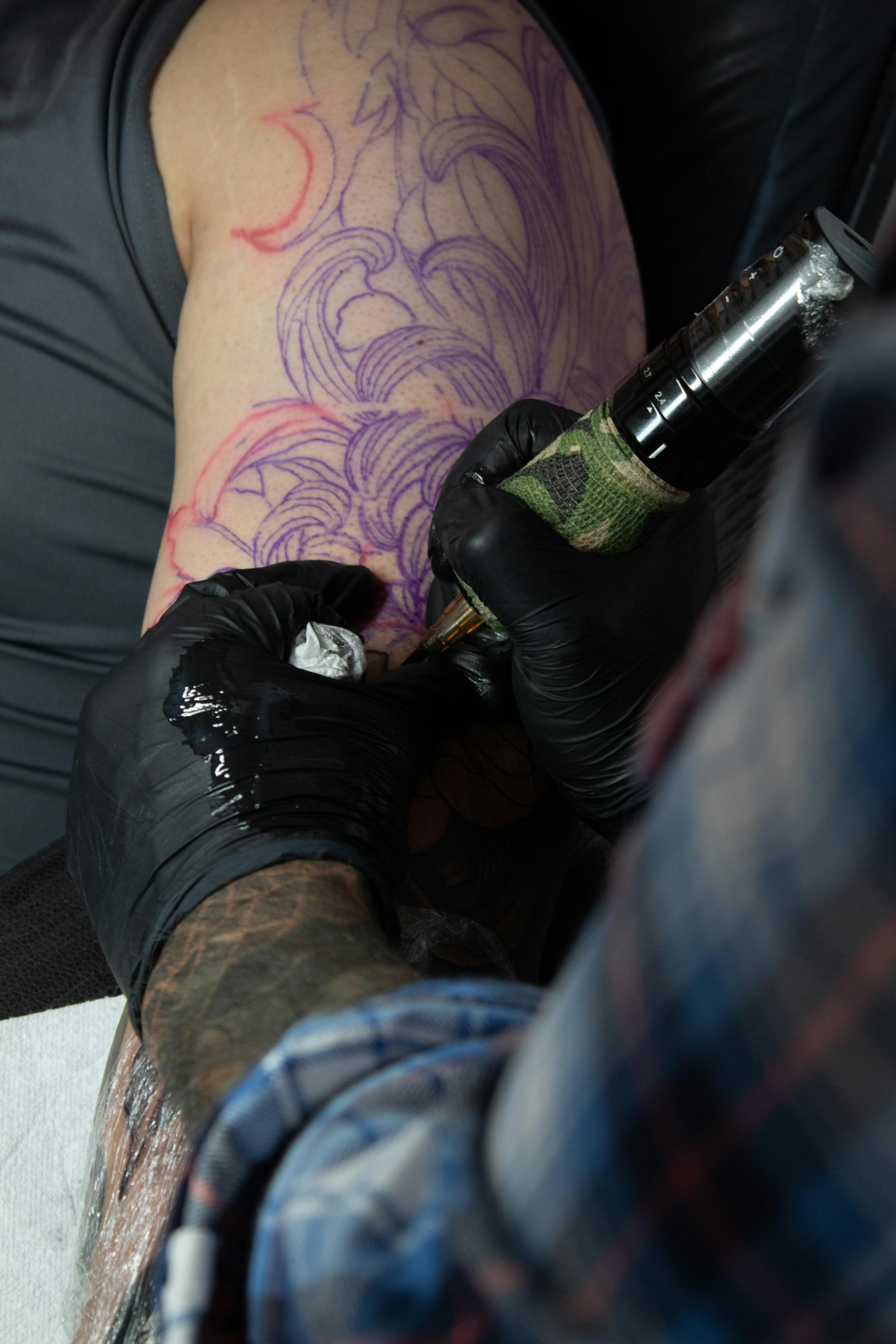
How to Protect Yourself as a Tattoo Client
The good news is that protecting yourself here is not complicated. It mostly comes down to asking the right questions and being intentional about where your design comes from. Here are some straightforward things you can do before booking your next session:
Ask your Tattoo Artist directly whether the design was created by hand or generated with AI tools. A confident, transparent answer is a good sign.
Avoid bringing in AI-generated images as final references. Use them for rough mood boards if you need to, but ask for a custom drawing based on your ideas.
Request a custom design from the start. Yes, it may cost more and take longer, but you end up with something that is genuinely yours.
Understand what you are paying for. A custom design from a skilled Tattoo Artist includes their time, talent, and years of practice. That has genuine value.
Check if the tattoo studio has a clear policy on AI-generated designs. Tattoo studios that take this seriously will usually be upfront about it.
None of this is about being overly cautious. It is about making sure the tattoo you carry for the rest of your life actually belongs to you in a meaningful way.
Why Ink Different Tattoos Keeps It Original, Every Time
When copyright issues and AI art are part of the conversation, the tattoo studio you choose matters more than ever. At Ink Different Tattoos, original human creativity is not optional, it is the whole point. Here is what makes Ink Different a place you can trust with your skin:
Custom designs, always. Every design starts with a genuine conversation between you and your Tattoo Artist. No templates, no shortcuts, no AI-generated fillers.
Tattoo Artists who actually listen. Our team at Ink Different takes time to understand your vision, story, and what you want the tattoo to say before a anything is drawn.
A clean, professional, and welcoming tattoo studio environment. Safety and comfort are built into every appointment, from setup to aftercare.
A culture of growth and mentorship. Ink Different Tattoos also trains the next generation of Tattoo Artists through our hands-on Traditional Tattoo Apprenticeship.
Choosing Ink Different Tattoos means choosing a tattoo studio where the work on your skin was made by a real person who cared. That is not something an algorithm can replicate.
Your Skin Deserves Original Art, Not an Algorithm's Best Guess
AI-generated designs might seem like a convenient shortcut, but the legal and ethical complications that come with them are serious. No copyright protection means no exclusivity. Style scraping means the image might have been built on an actual artist's work without permission. At the end of the day, a tattoo that carries no story or human touch, and no creative intention is just a copy of a copy.
You deserve better than that. Your tattoo is going to be on your body for the rest of your life, and it should mean something. Knowing where your design comes from is a simple but important step in making sure it does.
Book a consultation with Ink Different Tattoos today and work with a human Tattoo Artist who will create something that is legally and meaningfully yours.
Frequently Asked Questions
Can I copyright a tattoo design I made using an AI tool?
In most cases, no. The U.S. Copyright Office has consistently ruled that images produced entirely by AI without meaningful human creative input cannot be copyrighted. If you prompted an AI and used the output as-is, you likely have no legal claim to that design.
If a Tattoo Artist draws a custom design for me, who owns the copyright?
Typically, the Tattoo Artist retains copyright over the design they created, even after tattooing it on you. Some tattoo studios transfer usage rights to clients by agreement, so it is always worth having that conversation before your appointment.
Is it legal to get a tattoo based on an AI-generated image I found online?
Getting the tattoo itself is generally not illegal, but the AI image may have been generated using copyrighted artwork without the original artist's permission. Using it as a reference raises ethical concerns, and it could put both you and your Tattoo Artist in a gray area legally.
Why do some Tattoo Artists refuse to work from AI-generated references?
Many Tattoo Artists decline AI references because those images are often built on scraped artwork from other artists. This makes it an ethical issue as much as a legal one. Professional Tattoo Artists also tend to produce better results when they bring their own creative process into the design rather than replicating an AI image.