What the Difference Is Between Tattooing on Thin Skin vs. Thick Skin
Your line work is clean, your machine is dialed in, and you're proud of every piece in your portfolio. Then a client sits down for an ankle tattoo, and suddenly your smooth lines are blowing out and bruising. What changed? The skin. At Ink Different Tattoos, we've spent 15 years teaching aspiring artists that reading skin is one of the biggest gaps between a hobbyist and a working professional.
Skin thickness is the measure of how many layers and how much fat, muscle, and connective tissue sit beneath the surface where you deposit ink, and it directly controls how your needle behaves, making it essential knowledge for every Tattoo Artist. Master it, and you stop guessing. Ignore it, and even your best work falls apart on healing.
Key Takeaways
Thin skin: Found on wrists, ankles, ribs, and inner arms; requires a lighter hand to avoid blowouts and bruising.
Thick skin: Found on the outer arm, calf, thigh, and back; tolerates more pressure and holds ink well with proper technique.
Why it matters: Skin thickness controls needle depth, ink saturation, healing quality, and how sharp your lines stay permanently.
The skill: Reading skin is learned through hands-on mentorship in a real studio, not online shortcuts or videos alone.
Your path: Ink Different's Traditional Tattoo Apprenticeship trains beginners to work confidently on every body part with precision.
What Is the Difference Between Thin Skin and Thick Skin When Tattooing?
Thin skin has fewer layers and less cushioning beneath the surface, while thick skin has a denser epidermis and more fat or muscle underneath, which changes how deep your needle can safely travel to deposit ink permanently.
Your skin is made of three main layers: the epidermis (the surface), the dermis (where tattoo ink lives permanently), and the subcutaneous tissue (fat) below. The distance and density between these layers vary across the body, and that variation is what you're really learning to feel as a tattoo artist.
On thin skin, the dermis sits close to the surface with little padding, so a tiny mistake in depth or pressure shows up fast. On thick skin, you have more room to work, more forgiveness, and often better ink retention. The American Academy of Dermatology notes that skin structure and healing differ across the body, which is exactly why one machine setting never works everywhere.
Where Do You Find Thin Skin and Thick Skin on the Body?
Thin skin is concentrated on the wrists, ankles, inner arms, ribs, neck, feet, and hands, while thick skin covers the outer upper arm, calves, thighs, shoulders, and back, and knowing this body map is your first step to confident tattooing.
Learning this map is like learning the terrain before a hike. You wouldn't sprint blindly down an unfamiliar trail, and you shouldn't approach every body part with the same touch.
Thin-skin zones: Inner wrist, inner bicep, ankle, ribs, sternum, fingers, feet, behind the ear, and inside of thighs.
Thick-skin zones: Outer forearm, calf, thigh, upper back, deltoid, upper outer arm, and glutes.
Tricky in-between zones: The elbow ditch, knees, and areas over bone where skin stretches unpredictably during movement and healing.
Age, weight, sun exposure, hydration, and genetics also shift these categories. A client's forearm at 25 may behave differently than at 55. Reading the person in front of you, not just the chart, is the real skill that separates professionals from hobbyists.
Why Does Skin Thickness Matter When You Tattoo?
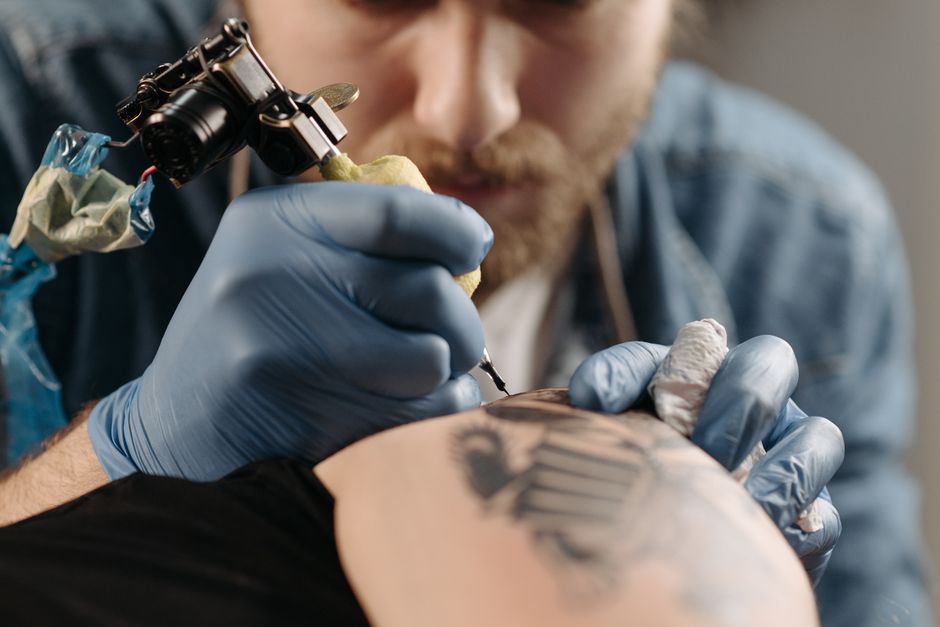
Skin thickness matters because it determines your needle depth, hand pressure, ink saturation, and how well a tattoo heals and holds its clarity, making it the difference between a crisp lifelong piece and a blurry, blown-out mess.
When you push too deep on thin skin, ink spreads past the dermis into the fat below. That's a blowout: the fuzzy, bruised look that ruins fine lines and damages your reputation. On thick skin, the opposite risk appears. Go too shallow, and the ink sits in the epidermis, which sheds during healing and leaves you with patchy, faded work that clients will return complaining about.
There's also the health and safety layer. Proper depth control keeps you working within the skin, not through it, which reduces trauma, infection risk, and scarring. Following OSHA bloodborne pathogen standards and understanding skin structure go hand in hand for any professional tattoo artist committed to client safety.
Pro Tip: Blowouts are almost always a depth-and-pressure problem, not a machine problem. Before you buy new gear, invest time learning to feel the skin beneath your hand.
How Should You Tattoo on Thin Skin?
On thin skin, you should use a lighter hand, shallower needle depth, slower passes, and often a slightly slower machine speed, because the dermis sits close to the surface with little cushioning to absorb pressure.
Think of thin skin like drawing on wet paper. Press too hard and it tears; move too fast, and it smears. The goal is control, not force. Let your machine and your finesse do the work.
Ease your pressure: Let the machine do the work instead of pushing down hard; the needle cuts more efficiently with minimal hand force.
Watch for bruising: Thin-skin areas bruise fast, which tells you to back off immediately before you cause permanent damage.
Stretch carefully: Over-stretching thin skin distorts your line when it relaxes post-session, compromising your design.
Choose designs wisely: Ultra-fine detail is riskier on ribs and ankles because those areas move and swell, spreading ink.
Plan for healing: Thin-skin tattoos often need touch-ups because healing pulls ink unevenly in areas with less tissue support.
Many beginners rush thin-skin areas because they look "easy" and small. That's one of the classic mistakes aspiring tattoo apprentices should avoid: treating a small tattoo as a simple one. Size has nothing to do with difficulty. Location and skin type do.
How Should You Tattoo on Thick Skin?
On thick skin, you can apply more consistent pressure and go slightly deeper to fully saturate the dermis, but you must stay disciplined so you don't over-work the area and cause scarring or ink blow-out.
Thick skin is forgiving, but forgiving does not mean careless. It rewards steady, confident passes with bold color and solid black. This is why large-scale work like sleeves and back pieces often live on thicker canvas. The skin can handle the volume of ink without compromising integrity.
The trap on thick skin is overconfidence. Because it takes more effort to saturate, some artists dig in and pass over the same spot too many times. That trauma can raise scar tissue and actually push ink out or create permanent texture issues. Efficiency, not aggression, is the goal.
How Do You Read Skin Before You Start? (Step-by-Step)
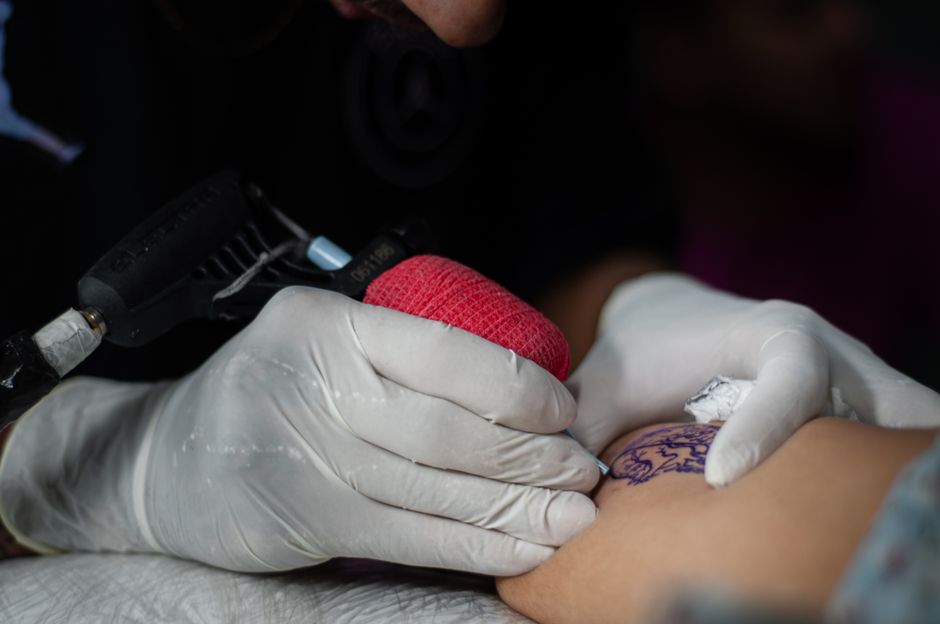
You read skin by assessing location, stretch, texture, and the client's individual traits before you ever turn on your machine, then adjusting your depth and pressure to match what you feel.
Here's the simple system we teach our apprentices to run before every session:
Step 1: Identify the zone. Is this a thin-skin area (wrist, ribs, ankle) or thick-skin area (calf, outer arm, back)? Set your baseline expectation and recall how similar zones behaved on past clients.
Step 2: Test the stretch. Gently pull the skin in multiple directions. Does it hold firm or move loosely over bone? Loose, thin skin needs extra care and lighter pressure.
Step 3: Read the client. Consider age, hydration, sun damage, weight, and body area. Older or sun-damaged skin often behaves thinner and more fragile than its location suggests.
Step 4: Adjust your setup. Dial your machine, needle grouping, and hand speed to match the terrain, not your habit. What worked yesterday on a different client may not work today.
Step 5: Start slow and check. Do a short line, observe how the skin takes ink, watch for bruising or ink spread, then commit once you know how it responds to your settings.
This is muscle memory you build over hundreds of supervised sessions. You can read about tools all day (see our guide to the tools every beginner tattoo artist should know), but skin reading only clicks when a Mentor is standing beside you saying "back off" or "go a touch deeper."
Where Can You Learn to Master Different Skin Types?
You learn to master thin and thick skin through hands-on, in-person mentorship in a working Tattoo Studio, which is exactly what Ink Different Tattoos' Traditional Tattoo Apprenticeship is built to deliver over 18 to 24 months.
Here's the hard truth: no video, no e-book, and no AI tool can feel skin for you. This is a tactile craft, and it's one of the big reasons a real tattoo career stays AI-proof even as robots enter the conversation. If you're stuck in a job that drains you while your creative potential sits unused, this is the kind of skill that turns a spark into an income.
For 15 years, since 2011, we've trained aspiring artists as a serious college alternative. You don't take on years of debt for a degree that may not pay off. Instead, you learn a hands-on trade from working professionals, which is a shift more people are making. In fact, tattoo apprenticeships gain ground as a solid alternative to college because they deliver real job skills without crushing debt.
What You Can Expect from Our Traditional Tattoo Apprenticeship
Our Traditional Tattoo Apprenticeship is an 18 to 24 month, four-phase Tattoo Artist training program that takes you from complete beginner to job-ready professional with licensing support and real studio experience.
Beginner-friendly: No prior art experience required. We build your foundation from day one, teaching you line weight, shading, skin reading, and machine control.
Start remote, finish in studios: Begin your learning remotely with theory and foundational skills, then move into a real Tattoo Studio for hands-on work where you feel skin under mentorship.
Personalized mentorship: Live, in-person guidance so you actually feel the difference between thin and thick skin under supervision.
Licensing support: We help you navigate state requirements, like how to get your tattoo license in Texas or understand how long a tattoo license takes in Colorado.
Career launch: Graduate job-ready with a portfolio, professional network, and the confidence to work on every body part safely and skillfully.
A Career That Comes With Confidence
You graduate with job-ready skills, licensing support, a guaranteed job offer at one of our tattoo studios, and the hard-won ability to work confidently on any body part, which is what clients pay for and what builds your reputation. That confidence is what the Bureau of Labor Statistics recognizes as skilled craft work that machines can't replicate.
Mentorship That Pushes Your Brand and Skills Further
Our Master Mentorship is a one-year, in-person program with celebrity and award-winning Mentors, including Al Fliction, Liz Cook, Kyle Dunbar, Boneface, and Jordi Pla, built for both beginners and experienced artists who want to master a specific style, grow their career, and build a sustainable business.
Making Tattoo Training Accessible for Everyone
We offer Spanish-speaking locations near you in Denver, Orange County, NYC, Miami, San Antonio, and San Diego, so language isn't a barrier to your creative career.
Ready to Become a Tattoo Artist?
You've felt it: the pull toward something that finally uses your hands, your eye, and your creativity. Seats in our apprenticeship are limited because real, hands-on mentorship can't be mass-produced.
Ready to become a Tattoo Artist? Apply now to Ink Different's Traditional Tattoo Apprenticeship and start building an AI-proof career with licensing support and real mentorship along the way. Or fill out our quick questionnaire to get personalized support and find out if the Traditional Tattoo Apprenticeship is right for you.
Frequently Asked Questions About Tattooing Different Skin Types
Is it harder to tattoo on thin skin or thick skin?
Thin skin is generally harder because the dermis sits close to the surface with little cushioning, leaving less room for error and higher risk of blowouts.
Why does my tattoo blow out on the wrist or ankle?
Blowouts on wrists and ankles happen because those thin-skin areas need a lighter hand and shallower depth. Pushing too deep spreads ink past the dermis into fat.
Do I need prior art experience to learn how to read skin?
No. Ink Different's Traditional Tattoo Apprenticeship teaches skin reading, needle depth, and machine control from day one through hands-on mentorship without requiring prior art skills.
How long does the Traditional Tattoo Apprenticeship take?
The Traditional Tattoo Apprenticeship takes 18 to 24 months across four phases. You start remotely and finish training in a working Tattoo Studio with in-person mentorship.
Can I really learn skin reading without an in-person Mentor?
Not reliably. Skin reading is tactile and situational, so live, in-person mentorship in a real studio is the fastest and safest way to truly master it and build confidence.
Does Ink Different offer Spanish-speaking training locations?
Yes. Ink Different Tattoos offers Spanish-speaking locations in Denver, Orange County, NYC, Miami, San Antonio, and San Diego to make training accessible to everyone.