What the Oldest Tattoo Traditions in the World Look Like Today
Imagine standing in front of a frozen mummy over 5,000 years old and seeing something you recognize instantly: ink pressed into skin. Long before smartphones, before written language, before entire civilizations rose and fell, human beings were marking their bodies with meaning. If you feel a pull toward tattooing that you can't quite explain, maybe it's because you're answering a call that's been echoing across thousands of years. Tattoo tradition is the ancient, continuous human practice of permanently marking the skin to signal identity, status, protection, healing, or belonging, passed down across generations and cultures.
At Ink Different Tattoos, we believe understanding where this craft comes from is the first step to honoring where you can take it. So let's walk back through time together, then bring the story forward to the life you could be building right now.
Key Takeaways
Oldest evidence: Ötzi the Iceman, over 5,000 years old, carries the oldest confirmed tattoos on human skin.
Living traditions: Polynesian tatau, Japanese irezumi, and Indigenous hand-tapping are still practiced today.
Common thread: Ancient tattoos marked identity, protection, and belonging, the same reasons people get inked now.
Modern path: You can honor these traditions through structured, hands-on Tattoo Artist Training.
Getting started: Ink Different's Traditional Tattoo Apprenticeship teaches beginners from the ground up over 18 to 24 months.
What are the oldest tattoo traditions in the world?
The oldest tattoo traditions in the world date back more than 5,000 years and appear on nearly every continent, from Ötzi the Iceman in the Alps to ancient Egyptian priestesses and Indigenous peoples across the Pacific.
Tattooing isn't a trend. It's one of the most ancient forms of human expression on Earth. Archaeologists have found tattooed remains and tattoo tools across Europe, Africa, Asia, and the Pacific, proving that our ancestors independently discovered the same powerful idea: your skin can tell your story.
These early traditions weren't about aesthetics alone. They marked warriors, healers, mothers, and leaders. They protected people from harm, recorded rites of passage, and connected the living to their ancestors. When you pick up a tattoo machine today, you're joining a lineage older than most written history.
Who was the oldest tattooed human ever found?
Ötzi the Iceman, a naturally mummified man who lived over 5,000 years ago and was discovered frozen in the Alps in 1991, carries the oldest confirmed tattoos on a human body, with 61 marks across his skin.
According to the Smithsonian Institution, Ötzi's tattoos were simple lines and crosses, placed over joints and areas of the body linked to strain and pain. Researchers believe they may have served a therapeutic or healing purpose, an ancient form of relief mapped directly onto the skin.
Think about that. The very first tattoos we can prove existed weren't decoration. They were function, intention, and care. That spirit of purpose still lives in every meaningful piece a great Tattoo Artist creates today.
How do Polynesian tattoo traditions look today?
Polynesian tattooing, known as tatau, survives today as a living cultural practice, still using traditional hand-tapping methods in places like Samoa and Tahiti while also influencing modern tattoo studios worldwide.
The word "tattoo" itself comes from the Polynesian "tatau." When European explorers reached the Pacific, they encountered elaborate tattoo traditions that carried genealogy, rank, and courage across the skin. The Samoan pe'a, a full body piece for men, is still tapped by hand today using tools made of bone and wood, a ceremony that can take many painful sessions to complete.
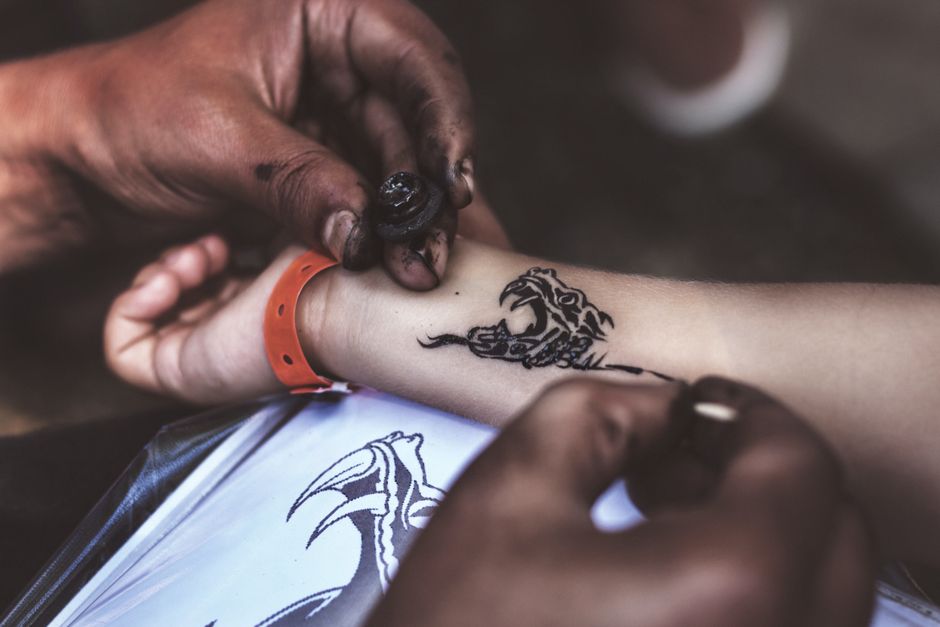
Today you'll see Polynesian designs everywhere, from beachside studios to elite Tattoo Shops in major cities. The best modern artists don't just copy the patterns. They study the meaning behind them, honoring the culture instead of borrowing from it blindly. That respect for the source is what separates a true craftsperson from someone chasing a look.
Pro Tip: Studying the history behind traditional styles makes you a stronger, more respectful artist. Clients trust an artist who understands the "why" behind the ink.
What happened to Japanese irezumi over the centuries?
Japanese irezumi evolved from ancient markings into a highly refined art form during the Edo period, and today it lives on through master artists who still practice traditional hand-poking called tebori alongside modern machine work.
Irezumi, the deeply detailed Japanese tattoo tradition, tells full stories across the back, arms, and legs: koi fish climbing waterfalls, dragons coiling through clouds, warriors from legend. Each element carries symbolic weight built over centuries.
Japanese tattooing survived periods of prohibition and stigma, yet the craft never died. Master artists guarded their techniques and passed them down through long, disciplined mentorships. That apprentice-to-master model is one of the oldest and most effective ways to learn tattooing, and it's exactly the foundation Ink Different is built on.
Where are ancient hand-tapped traditions still alive?
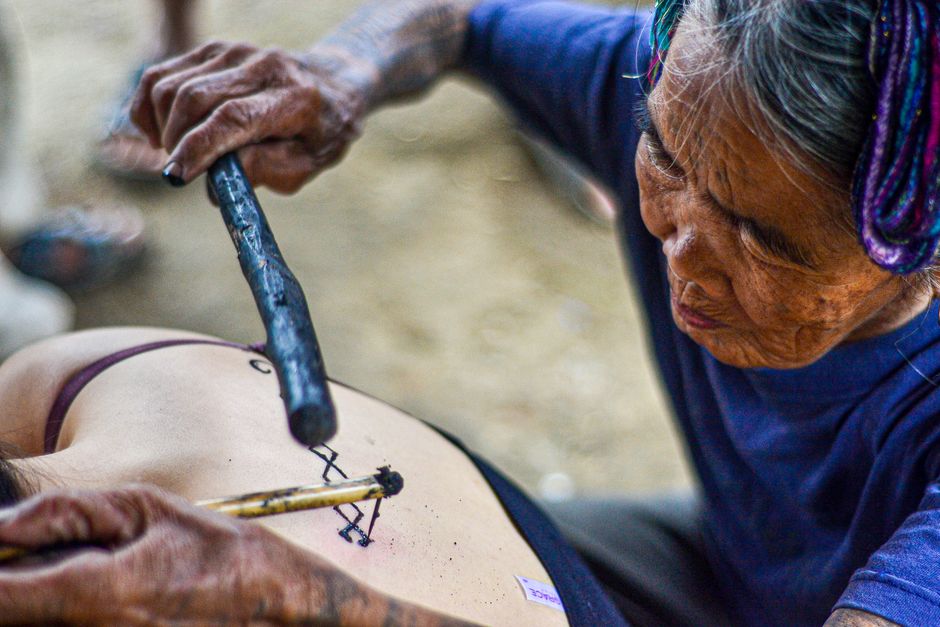
Ancient hand-tapped and hand-poked tattoo traditions are still alive across the Philippines, New Zealand, North America, and the Arctic, where Indigenous artists are actively reviving practices that colonization once tried to erase.
In the Philippines, the legacy of Whang-od, a Kalinga mambabatok known for hand-tapping tattoos into her late nineties, has inspired a global revival of traditional Filipino batok. In New Zealand, Māori tā moko continues to mark identity and ancestry. In the Arctic, Inuit women are reclaiming traditional skin-stitching tattoos that nearly vanished under colonial pressure.
These revivals prove something powerful: tattoo tradition doesn't die easily. It waits, and when a new generation is ready to carry it forward, it comes roaring back. You could be part of that next generation, connecting ancient roots to the future of the craft.
Why do these old traditions still matter for you?
These ancient tattoo traditions matter because they prove tattooing is a timeless human need, not a passing fad, making it one of the most durable, AI-proof creative careers you can build in a rapidly automating world.
Machines can generate images. Robots can print patterns. But the connection between a client and a skilled Tattoo Artist, the trust, the story, the human hand marking human skin, is something automation cannot replace. We dig into this more in our post on why tattoo artists are still essential.
According to the Bureau of Labor Statistics, craft and fine artists continue to find income through skilled, hands-on work that people value. Tattooing sits at the intersection of ancient tradition and modern demand. If you're stuck in a job that drains you while your creative potential collects dust, this is your sign that a real path exists.
Remember: Every legendary tattoo tradition survived because a mentor taught an apprentice. You don't have to figure this out alone.
How can you carry the torch of tattoo tradition today?
You can carry the torch of tattoo tradition by learning the craft the way it has always been taught: through hands-on mentorship, discipline, and time invested under experienced artists, exactly what a structured tattoo apprenticeship provides.
For thousands of years, tattooing was passed master to apprentice. That model works because tattooing is a physical, deeply human skill that can't be downloaded. At Ink Different Tattoos, we've spent 15 years, since 2011, training aspiring Tattoo Artists through live, in-person mentorship rooted in that same ancient tradition.
Our nationwide tattoo apprenticeship is a genuine college alternative for people who want to build something real with their hands. No wasted years. No mountain of generic debt. Just Tattoo Artist training focused on excellence, guided by Mentors who've walked the path before you.
What you can expect from our Traditional Tattoo Apprenticeship
Our Traditional Tattoo Apprenticeship runs 18 to 24 months across four structured phases. It's built for beginners, so you don't need any prior art experience to start. You'll train hands-on in real tattoo studios.
Personalized training: Hands-on coaching tailored to where you are and where you want to go.
Start remote, finish in studios: Build your foundation, then apply it in real working environments.
Beginner-friendly: We teach drawing, machine handling, and safety from day one.
Licensing support: We help you develop job-ready skills and navigate licensing requirements.
Safety is non-negotiable in any respectable tattoo studio. That's why our training covers hygiene standards aligned with OSHA bloodborne pathogen standards, so you learn to protect your clients the way a true professional must.
Mentorship that pushes your brand and skills further
Ready to go deeper? Our Master Mentorship is a one-year, in-person program for beginner and experienced artists alike. You'll train with celebrity and award-winning Mentors like Al Fliction, Liz Cook, Kyle Dunbar, Boneface, and Jordi Pla, perfect for mastering a specific style, growing your career, and building your own business.
Making tattoo training accessible for everyone
We offer Spanish-speaking locations so more people can access this ancient craft. You can find Spanish-speaking Tattoo Artist training in Denver, in Orange County, in NYC, in Miami, in San Antonio, and in San Diego.
How do you start your own tattoo journey?
You start your tattoo journey by studying the craft's roots, choosing a structured apprenticeship, committing fully, and learning hands-on under experienced mentors, the same proven path that kept tattoo tradition alive for millennia.
Study the history and styles. Understanding traditions like tatau and irezumi builds respect and sharpens your eye as an artist.
Learn the fundamentals. Get familiar with the gear. Our guide to the tools every beginner tattoo artist should know is a great starting point.
Avoid common beginner pitfalls. Read up on the mistakes aspiring tattoo apprentices should avoid before you begin.
Choose a structured apprenticeship. Mentorship is how this craft has always been taught. Apply to a program built for excellence.
Commit and build your brand. As you grow, start building your presence using these platforms to help tattoo artists build their brand.
Ready to become part of a 5,000-year story?
The oldest tattoo traditions in the world didn't survive by accident. They survived because people learned them, honored them, and passed them on.
Ink Different is here as your guide, with Mentors who care, a "Good Humans" culture, and a supportive family-like community ready to help you grow. Seats in our tattoo apprenticeship are limited, because real mentorship can only stretch so far.
Ready to become a Tattoo Artist? Apply now to Ink Different's Traditional Tattoo Apprenticeship and start building an AI-proof career, with licensing support along the way. Want to make sure it's the right fit? Fill out our quick questionnaire to get personalized support and find out if our Traditional Tattoo Apprenticeship is right for you.
Frequently Asked Questions
What is the oldest tattoo tradition in the world?
The oldest confirmed tattoos belong to Ötzi the Iceman, who lived over 5,000 years ago in the Alps. His 61 marks likely served a therapeutic or healing purpose.
Do I need prior art experience to become a tattoo artist?
No. Ink Different's Traditional Tattoo Apprenticeship is built for beginners and teaches drawing, machine handling, and safety fundamentals from your first phase.
How long does a tattoo apprenticeship take?
Most structured tattoo apprenticeships take 18 to 24 months. Ink Different's four-phase program lets you start remote and finish hands-on in real studios.
What makes Ink Different different from other options?
Ink Different offers live, in-person mentorship from award-winning mentors, a college alternative approach, 15 years of experience since 2011, and a supportive community.
Is tattooing a stable career in an age of AI?
Yes. Tattooing is a hands-on, deeply human craft that automation cannot replace. Its 5,000-year history proves it's one of the most durable, AI-proof creative careers.
Are there Spanish-speaking tattoo training locations?
Yes. Ink Different offers Spanish-speaking Tattoo Artist Training in Denver, Orange County, NYC, Miami, San Antonio, and San Diego, making the craft accessible to more people.