What to Do in the 24 Hours Right After Getting a Tattoo
You just walked out of the tattoo studio with fresh ink under a bandage, and the next 24 hours matter more than you might think. Tattoo aftercare in the first 24 hours is the critical window where your fresh tattoo is an open wound and your decisions directly shape how clean, sharp, and colorful it heals. Treat this day right, and the rest of the healing usually takes care of itself.
At Ink Different Tattoos, we've spent 15 years training professional Tattoo Artists who understand that great ink doesn't end when the tattoo machine turns off. Aftercare is part of the craft. Here's exactly what to do in the first day, step by step.
Key Takeaways
Bandage timing: Leave the initial covering on for 2 to 24 hours, following your artist's specific instructions.
First wash: Gently clean the tattoo with lukewarm water and fragrance-free soap, then pat dry.
Moisturize lightly: Apply a thin layer of fragrance-free ointment or lotion, never a thick glob.
Avoid completely: No sun, no soaking, no gym, no scratching, no tight clothing over the fresh tattoo.
Watch for trouble: Some redness and oozing is normal; spreading heat, pus, or fever is not.
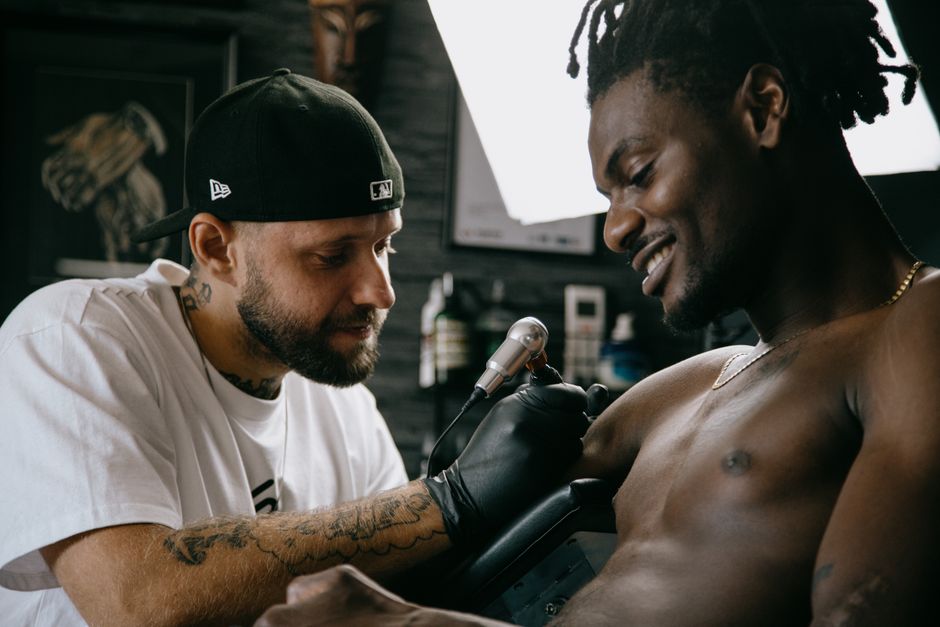
What should you do in the first few hours after getting a tattoo?
In the first few hours, leave the bandage your tattoo artist applied in place, keep the area clean, and avoid touching or fussing with the fresh tattoo. Your artist covered it for a reason: your skin is a wound that needs protection from bacteria and friction.
Resist the temptation to peek every ten minutes. Each time you unwrap and rewrap, you expose the area to whatever is on your hands and in the air. Listen to your body too. A fresh tattoo can leave you lightheaded, so eat something, hydrate, and take it easy for the rest of the day.
Pro Tip: Whatever your tattoo artist told you in the chair beats any article online, including this one. Their instructions are tailored to the ink, the placement, and the wrap they used.
When should you remove the bandage after getting a tattoo?
Remove a traditional bandage within 2 to 24 hours, or follow the specific timeline your artist gave you for second-skin adhesive films, which can stay on for several days. The type of covering changes everything.
If your artist used a basic wrap or absorbent pad, take it off on the earlier side, usually a few hours in, then wash. If they used a transparent second-skin film like Saniderm or Dermalize, leave it alone until your artist's recommended window, often one to three days. Pulling that off early defeats the purpose.
Wash your hands thoroughly before you touch the covering or the tattoo. This single habit prevents most early infections. Facilities that follow OSHA bloodborne pathogen standards drill hand hygiene into every artist for exactly this reason.
How do you wash a fresh tattoo correctly?
Wash a fresh tattoo with clean hands, lukewarm water, and a mild fragrance-free soap, using gentle fingertip circles before patting it dry with a clean paper towel. No washcloths, no scrubbing, no loofahs.
Here's the simple step-by-step that works in the first 24 hours:
Step 1: Wash your hands for at least 20 seconds with soap and water.
Step 2: Remove the bandage slowly. If it sticks, wet it with lukewarm water first.
Step 3: Rinse the tattoo under lukewarm water to clear away plasma, ink, and blood.
Step 4: Lather a small amount of fragrance-free soap in your hands and gently clean the tattoo with your fingertips.
Step 5: Rinse thoroughly, then pat dry with a clean paper towel. Never rub.
Step 6: Let it air dry for a few minutes, then apply a thin layer of recommended ointment or fragrance-free lotion.
The American Academy of Dermatology tattoo care guidelines back this gentle, fragrance-free approach for keeping your new ink clean and calm during healing.
What should you avoid in the first 24 hours after a tattoo?
In the first 24 hours, avoid direct sun, soaking in water, sweaty workouts, tight clothing, alcohol, and scratching or picking at the fresh tattoo. Each of these threatens the ink while your skin is still an open wound.
Keep this short list taped to the front of your mind:
No soaking: Skip pools, hot tubs, baths, lakes, and the ocean. Quick showers are fine.
No sun: UV light fades fresh ink fast and irritates healing skin.
No sweat: Hold off on the gym and heavy exertion for a couple of days.
No tight clothes: Friction pulls at scabs and dulls color. Choose loose, breathable fabric.
No scratching: It will itch. Tap or gently moisturize instead of digging in.
No over-moisturizing: A thick layer suffocates the skin and traps bacteria. Thin and light wins.
Think of your tattoo like a seed you just planted. Flood it or bake it in the sun, and nothing good grows. Give it light, air, and gentle care, and it thrives.
What is normal versus a warning sign in the first day?
Mild redness, swelling, warmth, and a little clear or ink-tinted fluid are normal in the first 24 hours, while spreading heat, thick yellow or green pus, red streaks, or fever are warning signs. Knowing the difference saves you panic and keeps you safe.
Your body treats a tattoo like any wound, so some inflammation is expected. A fresh tattoo often weeps a thin, watery mix of plasma and excess ink for the first day. That's healing, not infection.
Call a doctor if you notice fever, chills, growing redness that radiates out from the tattoo, foul-smelling discharge, or increasing pain after day one. An allergic reaction or infection is rare in a clean studio, but you should never ignore those signals.
Remember: When something feels off, reach out to your tattoo artist first. A professional has seen thousands of healing tattoos and can tell you fast whether you're fine or need a doctor.
Why does the first 24 hours matter so much after getting a tattoo?
The first 24 hours matter most because your tattoo is a fresh wound at its highest risk for infection and ink loss, and your day-one choices lock in how crisp and vivid it heals for life. You only get one shot at this window.
Blown lines, faded color, and patchy healing often trace back to day-one mistakes: ripping off a second-skin too early, slathering on scented lotion, or hitting the pool that same night. A tattoo is permanent, but a good heal is not guaranteed. Your care earns it.
This is also where you start to appreciate the skill behind the needle. A great tattoo artist doesn't just draw well. They understand skin, depth, hygiene, and healing, which is why aftercare instructions are part of the job. If reading this makes you curious about the craft itself, keep going.
Want to learn the craft from the other side of the machine?
If aftercare, hygiene, and the science of skin fascinate you, becoming a tattoo artist through a structured tattoo apprenticeship is a real, AI-proof career path you can start with no prior experience. Plenty of people discover their calling while healing their first tattoo.
Maybe you're stuck in a job that drains you, watching your creative potential gather dust. A robot can't read skin, calm a nervous client, or adapt a design in real time, which is exactly why tattoo artists are still essential. This is a hands-on human craft, and it's one of the smartest college alternatives for aspiring tattoo artists available today.
For 15 years, Ink Different Tattoos has trained professional Tattoo Artists through live, in-person mentorship. We are a nationwide tattoo apprenticeship built on a "Good Humans" culture and a family-like community that has your back.
What you can expect from our Traditional Tattoo Apprenticeship
Our Traditional Tattoo Apprenticeship runs 18 to 24 months through a proven four-phase structure. You get personalized, hands-on Tattoo Artist training in professional tattoo studios.
Beginner-friendly: No prior art experience required. We teach the fundamentals from day one.
Hands-on mentorship: Learn live and in-person from working professionals.
Licensing support: We guide you toward job-ready skills and a path to working professionally.
Real foundations: Hygiene, safety, machine handling, and yes, teaching proper aftercare.
If you want a career outlook on the field, the Bureau of Labor Statistics on craft and fine artists is a solid starting point.
A career that comes with confidence
Our training is built to make you job-ready, not just certified on paper. You finish with job-ready skills, licensing support, and a guaranteed job offer at one of our tattoo studios, ready to work professionally in a real tattoo shop.
Mentorship that pushes your brand and skills further
If you want to accelerate, our one-year in-person Master Mentorship pairs you with celebrity and award-winning Mentors, including Al Fliction, Liz Cook, Kyle Dunbar, Boneface, and Jordi Pla. It's built for mastering a specific style, growing your career, and owning your own business.
Making tattoo training accessible for everyone
Ink Different operates nationwide, with the Traditional Tattoo Apprenticeship available in 60+ locations, including Spanish-speaking locations in Denver, Orange County, NYC, Miami, San Antonio, and San Diego.
Ready to become a tattoo artist?
If reading about aftercare sparked your interest in the craft, that's worth following up on. Seats in our tattoo apprenticeship are limited.
Ready to stop wasting your potential and build an AI-proof career? Apply now to Ink Different's Traditional Tattoo Apprenticeship and start building real skills with licensing support along the way. Not sure yet? Fill out our quick questionnaire to get personalized support and find out if our Traditional Tattoo Apprenticeship is right for you.
Frequently Asked Questions
How long should I leave the bandage on after getting a tattoo?
Leave a standard bandage on for 2 to 24 hours. If your artist used a second-skin film like Saniderm, follow their timeline, which can be one to three days.
Can I shower in the first 24 hours after a tattoo?
Yes, a quick lukewarm shower is fine. Avoid soaking, hot water, and letting the direct stream pound the tattoo. Pat it dry with a clean paper towel afterward.
Is it normal for my new tattoo to ooze or feel warm?
Yes. A fresh tattoo often weeps clear or ink-tinted plasma and feels warm and slightly swollen in the first day. Spreading heat, pus, or fever is not normal.
What lotion should I use on a fresh tattoo?
Use a thin layer of fragrance-free ointment or unscented lotion recommended by your artist. Avoid scented products and thick globs, which trap bacteria and slow healing.
Do I need prior experience to join a tattoo apprenticeship?
No. Ink Different Tattoos' Traditional Tattoo Apprenticeship is built for beginners and teaches fundamentals from day one, including hygiene, safety, machine handling, and proper aftercare.
How long does the Traditional Tattoo Apprenticeship take?
The Traditional Tattoo Apprenticeship takes 18 to 24 months through a 4-Phase structure, with personalized hands-on mentorship, the option to start remote, and licensing support toward working professionally.