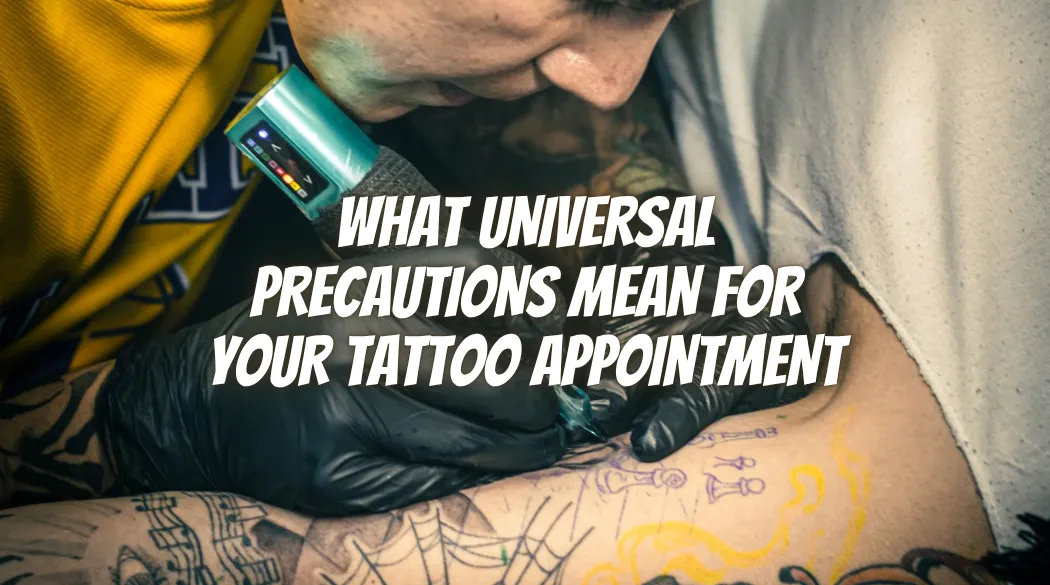
What Universal Precautions Mean for Your Tattoo Appointment
Getting a tattoo means trusting someone with your skin and your health. That trust starts with a simple, invisible discipline called universal precautions. Universal precautions are infection-control practices that treat every client's blood as potentially infectious. The same strict safety steps apply to every person, every time.
At Ink Different Tattoos, we teach this discipline as the foundation of the craft. A skilled tattoo means little if the process behind it was not safe.
Key Takeaways
Universal precautions treat every client's blood as potentially infectious, so identical safety steps apply to everyone.
OSHA's Bloodborne Pathogens Standard is the legal framework professional Tattoo Artists follow.
Look for fresh gloves, sealed sterile needles,single-use ink caps, andbarrier-wrapped equipment at your appointment.
You have the right to ask your Tattoo Artist about their sterilization and cross-contaminationpractices.
Ink Different Tattoo teaches OSHA-aligned safety from day one of the Traditional Tattoo Apprenticeship.
What are universal precautions in tattooing?
Universal precautions are infection-control practices that treat every client as if their blood could carry a disease. The same hygiene steps apply to everyone, without exception.
The idea comes from healthcare. Doctors and nurses cannot know a patient's full medical history at a glance, so they treat every patient with the same caution. Tattooing uses this same principle, because needles break the skin, and broken skin can let infection in.
The OSHA Bloodborne Pathogens Standard is the backbone of these practices in the United States. It governs how workplaces handle exposure to blood and other infectious materials. This is why professional Tattoo Artists wear gloves, use single-use needles, and disinfect their stations between clients.
Why do universal precautions matter for your appointment?
Universal precautions matter because a tattoo is an open wound. Without strict hygiene, that wound can become a pathway for bacteria and bloodborne pathogens like hepatitis B, hepatitis C, and HIV.
The tattoo needle breaks the skin thousands of times per minute. The only thing standing between you and infection is the discipline of your Tattoo Artist and the cleanliness of the tattoo studio around you.
When a tattoo studio follows universal precautions, you are protected from cross-contamination. This means germs cannot travel from a previous client, a dirty surface, or unwashed hands into your fresh tattoo. Proper aftercare then continues that protection at home. The American Academy of Dermatology's tattoo care guidelines pick up right where the tattoo studio's safety leaves off.
What should you see when you sit down in the chair?
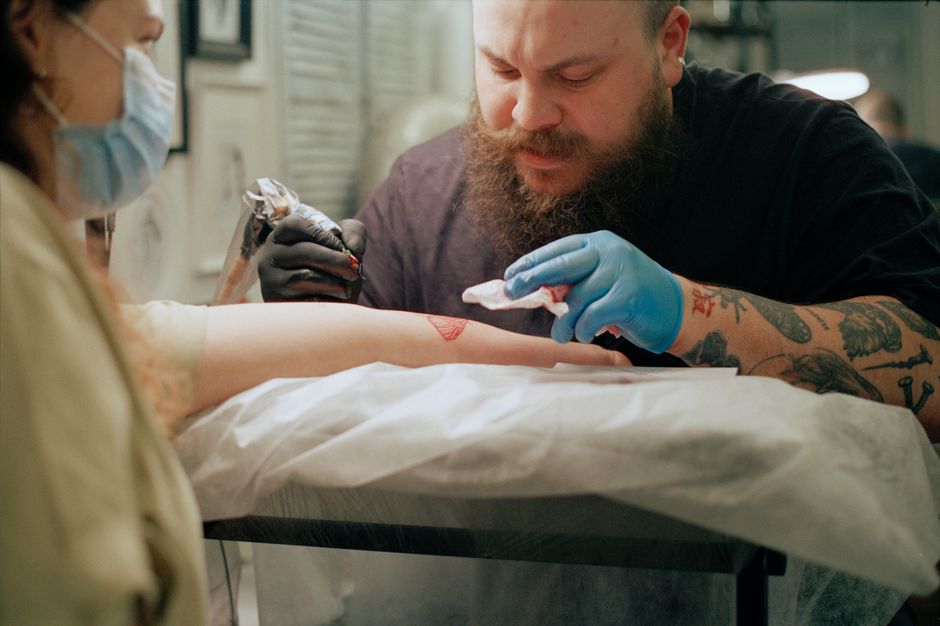
When you sit down for a tattoo, you should see your Tattoo Artist wash their hands and put on fresh gloves. You should also see them open sterile needles from sealed packaging, and set up a station wrapped in disposable barriers.
You do not need a certification to spot a clean setup. Your own eyes are enough. Here is what a professional station looks like:
Fresh gloves: Your Tattoo Artist should glove up in front of you and change gloves if they touch anything unclean.
Sealed needles: New, single-use needles opened from sterile packaging while you watch.
Single-use ink caps: Ink poured into disposable caps, never dipped back into the main bottle.
Barrier film: Plastic wrap or covers over the machine, clip cord, spray bottles, and armrest.
A sharps container: A puncture-proof, labeled container for used needles.
Pro Tip:If anything looks reused, unwrapped, or dirty, you have every right to pause, ask questions, or walk away. A true professional will respect that instinct.
How does a clean tattoo setup work, step by step?
A clean tattoo setup follows a repeatable sequence. Sanitize hands, prep the client's skin, set up a barrier-protected station, tattoo safely, then clean up and dispose of everything correctly.
Here is the process a well-trained Tattoo Artist follows for every appointment:
Hand hygiene and gloving: The Tattoo Artist washes hands thoroughly and puts on a fresh pair of disposable gloves.
Skin preparation: Your skin is cleaned, disinfected, and shaved with a single-use razor if needed.
Station setup: The workstation, machine, and cords are covered in disposable barrier film, and sterile needles are opened in front of you.
Ink handling: Ink is poured into single-use caps so nothing contaminated re-enters the bottle.
The tattoo: The Tattoo Artist works with sterile equipment, changing gloves and re-cleaning as needed.
Safe cleanup: Needles go straight into a sharps container, barriers and gloves are discarded, and surfaces are disinfected.
Aftercare handoff: You leave with clear instructions to protect your new tattoo while it heals.
This process becomes second nature to a professional. It is muscle memory built through consistent, professional training.
What questions should you ask your Tattoo Artist?
You should ask your Tattoo Artist whether they follow OSHA bloodborne pathogen standards. Ask how they sterilize or dispose of equipment, and whether they hold a current bloodborne pathogen certification.
A confident, well-trained Tattoo Artist welcomes these questions. Silence, defensiveness, or vague answers are red flags. Consider asking:
Are your needles single-use and opened in front of me?
How do you prevent cross-contamination between clients?
Do you hold a current bloodborne pathogen certification?
How is your tattoo studio licensed and inspected?
If you are researching tattoo studios in a new state, licensing rules vary widely. You can see how requirements differ by reading our guides on how to get your tattoo license in Texas and how long a tattoo license takes in Colorado.
Why do universal precautions matter if you want to be a Tattoo Artist?
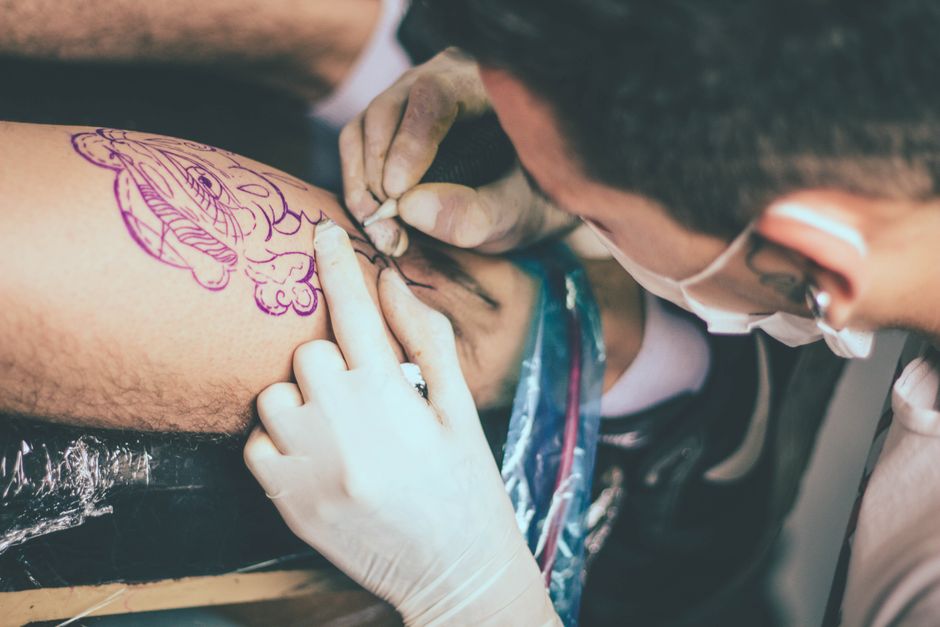
If you want to be a Tattoo Artist, mastering universal precautions is non-negotiable. Safety is the first skill professional tattoo studios look for, and it is the foundation every career is built on.
Maybe you are ready to stop sitting in the chair and start holding the machine yourself. The Tattoo Artists who build lasting careers are the ones who take safety seriously from day one.
Clients notice. Health inspectors notice. Tattoo studio owners notice. Long before you build a reputation for great line work, you build one for being someone people can trust with their skin.
Too many beginners skip this foundation and pay for it later. We break down the traps in our guide to the mistakes aspiring tattoo apprentices should avoid.
How does Ink Different train you to do this the right way?
Ink Different Tattoos teaches OSHA-aligned safety and universal precautions from day one of our Traditional Tattoo Apprenticeship. You graduate with job-ready skills and licensing support, not just artistic ability.
We have trained aspiring Tattoo Artists through live, in-person mentorship for over 15 years. We are a college alternative built for people who want a real craft and a real path to working professionally.
What you can expect from our Traditional Tattoo Apprenticeship
Our Traditional Tattoo Apprenticeship runs 18 to 24 months across four structured phases. You finish hands-on in professional tattoo studios under a professional Mentor. No prior art experience is required. You will master:
Safety and sanitation: universal precautions, cross-contamination prevention, and OSHA-aligned practices.
Machine handling and technique: the tools and skills covered in our guide to tools every beginner Tattoo Artist should know.
Hands-on client work: supervised, hands-on experience under a professional Mentor.
Licensing support: guidance toward the credentials you need to work professionally.
Because you train live and in-person under working professionals, you finish with real confidence. You can walk into a tattoo studio and set up a safe, clean station without hesitation. That confidence is what job-ready training buys you. We support you toward licensing and teach you the skills tattoo studios actually hire for.
Ready to go further? Our one-year, in-person Master Mentorship connects you with award-winning Master Mentors including Al Fliction, Liz Cook, and Kyle Dunbar. It is built for beginners and experienced Tattoo Artists alike who want to master a specific style and grow their own business.
We offer Spanish-speaking locations in Denver, Orange County, New York City, Miami, and San Diego. Language should never stand between you and your goal.
Remember:Seats in our Traditional Tattoo Apprenticeship are limited, because live mentorship means personalized, one-on-one attention. If this is your moment, don't let it pass.
Ready to build a career on solid ground?
Universal precautions are proof that great tattooing starts with respect: respect for the client, the craft, and the responsibility of holding a machine. That same respect is the foundation of everything we teach.
If you are ready for a career change, the first step is a tattoo apprenticeship. Apply now to Ink Different's Traditional Tattoo Apprenticeship and start building an AI-proof career with licensing support along the way. Not sure yet? Fill out our quick questionnaire online to get personalized support and find out if the Traditional Tattoo Apprenticeship is right for you.
Frequently Asked Questions
What are universal precautions in a tattoo studio?
Universal precautions are infection-control practices that treat every client's blood as potentially infectious. Tattoo Artists apply identical hygiene steps, including fresh gloves, single-use needles, and sterile stations, to everyone, every time.
How can I tell if my Tattoo Artist follows universal precautions?
Watch for hand washing, fresh gloves, sterile needles opened in front of you, single-use ink caps, barrier-wrapped equipment, and a sharps container. These signs confirm proper safety practices.
Do I need art experience to learn tattoo safety and become an artist?
No. Ink Different's Traditional Tattoo Apprenticeship teaches safety, technique, and drawing fundamentals from day one. No prior art experience is required.
How long does Ink Different's Traditional Tattoo Apprenticeship take?
The Traditional Tattoo Apprenticeship runs 18 to 24 months across four phases. You finish hands-on in real tattoo studios with live mentorship.
What makes Ink Different different from other training options?
Ink Different offers live, in-person mentorship, award-winning Master Mentors, and over 15 years of experience teaching safety-first practices. We are a college alternative focused on job-ready professional skills.
Which agency sets tattoo safety standards in the United States?
OSHA sets the Bloodborne Pathogens Standard governing workplace exposure to blood. It is the framework professional Tattoo Artists follow alongside state and local regulations.