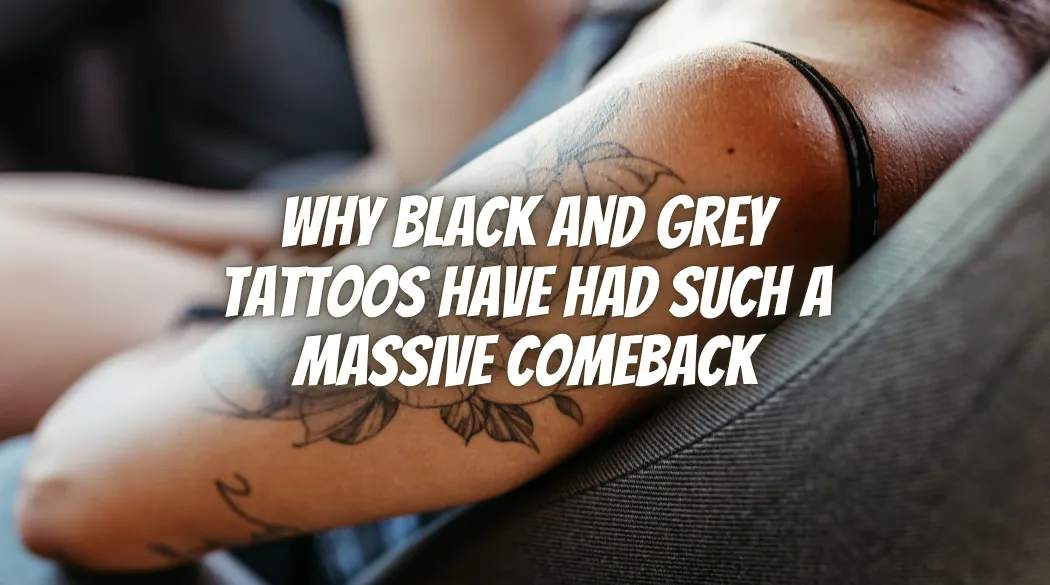
Why Black and Grey Tattoos Have Had Such a Massive Comeback
The bold color pieces of a decade ago are quietly stepping aside for a softer, moodier style taking over arms, backs, and sleeves everywhere. Black and grey tattooing is a technique that uses only black ink, diluted into a spectrum of grey washes, to create depth, shading, and realism without any color.
At Ink Different Tattoos, we have spent 15 years watching this style rise and helping aspiring Tattoo Artists learn to command it.
Key Takeaways
What it is: Black and grey tattooing uses diluted black ink to build shading, depth, and realism without color.
Why it is back: Timeless aging, versatility, and social media realism trends drove a massive resurgence in demand.
Career fit: Mastering black and grey opens doors to portraiture, fine line, and realism, all high-demand niches.
How to learn: A structured tattoo apprenticeship with live mentor feedback is the fastest path to competence.
Ink Different: Our Traditional Tattoo Apprenticeship builds an AI-proof career with licensing support along the way.
What Are Black and Grey Tattoos?
Black and grey tattoos are pieces created entirely from black ink, thinned into a range of grey tones to produce shading, contrast, and lifelike depth without using any color pigment.
Think of it like a pencil sketch that lives on skin. Instead of relying on bright pigment to grab attention, the style leans on light, shadow, and the artist's control of the tattoo machine to build dimension.
This is a technique that rewards patience and precision. A single portrait can carry a dozen shades of grey, each one carefully layered to make a face feel like it could blink. That is the seed of skill we help our tattoo apprentices plant early.

Why Have Black and Grey Tattoos Made Such a Comeback?
Black and grey tattoos have surged back because they age gracefully, photograph beautifully online, and fit nearly any subject, from portraits to fine line florals, making them the most versatile style a tattoo artist can offer.
Trends move in cycles, but this comeback is more than a fad. Clients today want ink that still looks sharp in twenty years, and black and grey holds its clarity far longer than many heavily saturated color pieces.
Social media poured fuel on the fire. Realism portraits and micro-realism pieces perform incredibly well on Instagram and TikTok, and that visibility trained a whole generation of clients to crave the style. If you want to see how artists ride these waves online, our guide on platforms to help tattoo artists build their brand breaks it down.
Where Did the Black and Grey Style Come From?
Black and grey tattooing traces its roots to the prison culture of 1970s Los Angeles, where inmates improvised single-needle machines and diluted ink to create fine, detailed work with limited supplies.
The style eventually broke out of those walls thanks to legendary artists like Jack Rudy and Freddy Negrete, who refined the single-needle fineline approach and brought it into professional tattoo studios. From there it spread into Chicano art, religious imagery, and eventually the hyper-realism we see today.
Understanding this lineage matters. When you know where a style came from, you carry its story into every piece you create. That respect for craft is part of the culture we protect at Ink Different.
Why Do Clients Keep Choosing Black and Grey?
Clients choose black and grey because it feels timeless, hides skin-tone variation well, suits every part of the body, and delivers emotional depth that bright color sometimes cannot match.
Here is what keeps demand high year after year:
Longevity: Grey washes tend to age more gracefully than saturated color.
Versatility: Works on portraits, script, nature, geometric, and religious themes alike.
Skin compatibility: Reads well across a wide range of skin tones.
Emotion: Shadow and light carry a mood that clients connect with deeply.
This demand is not slowing down. According to the Bureau of Labor Statistics on craft and fine artists, handmade, personal art continues to see steady demand, and tattooing sits squarely in that category as one of the most durable creative careers available.
What Skills Does a Black and Grey Tattoo Artist Need?
A black and grey tattoo artist needs mastery of shading, smooth grey-wash gradients, needle depth control, strong reference drawing, and a deep understanding of contrast and negative space.
Color can sometimes forgive a shaky line, but black and grey exposes everything. Every uneven transition, every patchy shade, every saturation mistake shows. That is exactly why this style separates hobbyists from professionals.
You also need discipline around safety and hygiene. Working clean is non-negotiable, and following OSHA bloodborne pathogen standards protects both you and every client who sits in your chair. Before you pick up a machine, learn the craft the right way and dodge the traps we outline in our guide on mistakes aspiring tattoo apprentices should avoid.
How Do You Learn to Tattoo in Black and Grey?
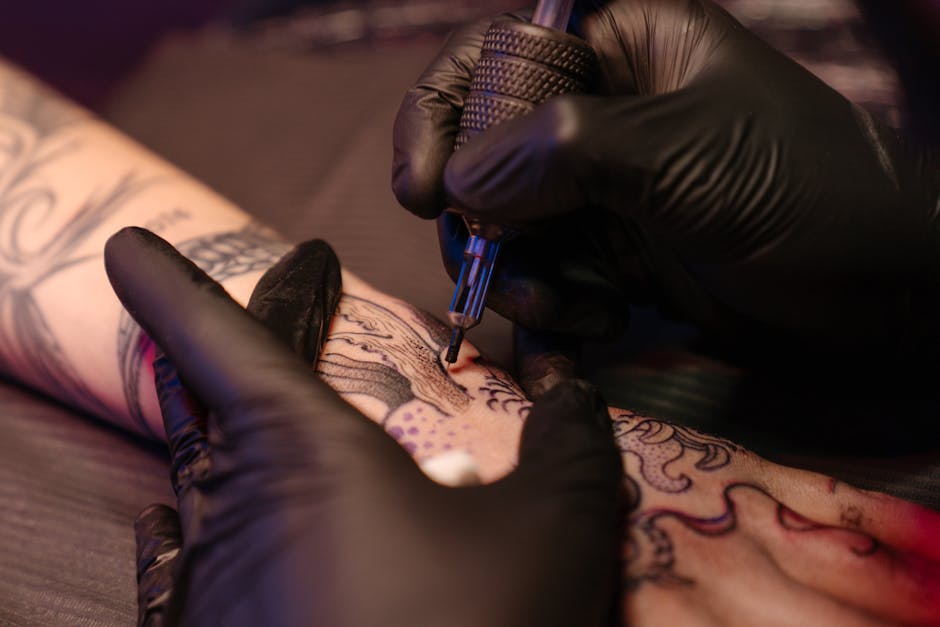
You learn black and grey tattooing through a structured tattoo apprenticeship, where you master fundamentals in order, practice under live mentor supervision, and build toward real client work step by step.
There is no shortcut, but there is a clear path. Here is how the journey typically unfolds:
Step 1: Build your drawing foundation. Learn value studies, shading, and reference work with pencil and paper before you ever touch skin.
Step 2: Master machine handling. Get comfortable with needle depth, speed, and control on practice skin.
Step 3: Practice grey-wash gradients. Dial in your dilution and layering to create smooth, seamless transitions.
Step 4: Work on live clients. Tattoo real people under direct mentor supervision, refining your process with feedback.
Step 5: Prepare for licensing. Complete safety training and licensing requirements so you can work professionally.
If timing is on your mind, know that there is never a perfect moment, only the one you decide to seize. Our post on why spring is the best time to become a tattoo artist makes the case that the best time to start is now. You can also explore our breakdown of tools every beginner tattoo artist should know to get a head start on what you will encounter in your apprenticeship.
How Ink Different Helps You Master This Craft
Ink Different Tattoos offers a Traditional Tattoo Apprenticeship, an 18 to 24 month, four-phase training program that takes you from beginner to job-ready, with licensing support and an AI-proof career at the end.
We have been training professional Tattoo Artists since 2011, which means 15 years of refining how people actually learn this craft. We are a genuine college alternative for aspiring artists who chase excellence instead of shortcuts.
Here is what your journey with us looks like:
Start remote, finish in studios: Begin building fundamentals from wherever you are, then move into a working tattoo studio.
Personalized hands-on training: Live, in-person mentorship that shapes your skills in real time.
Built for beginners: No prior art experience needed. We help you plant the seed and grow it.
Licensing support: We guide you toward the credentials you need to work professionally.
A tattoo is one of the few things a machine cannot truly replicate. If you doubt that, read why tattoo artists are still essential. This is a human craft, and that makes it a career worth building.
Good Humans culture: When you join Ink Different, you are not a number. You join a supportive, family-like community that has your back through every phase of your training.
Ready to Go Further With Master Mentorship?
Ink Different's Master Mentorship is a one-year, in-person program where you train alongside award-winning Master Mentors to master a specific style, explode your career, or launch your own business.
If black and grey realism is calling your name, this is where you sharpen it to a professional edge. You learn directly from names like Al Fliction, Liz Cook, Kyle Dunbar, Boneface, and Jordi Pla, the kind of access most artists never get.
Master Mentorship works for both beginners and experienced Tattoo Artists who want intensive, focused skill development. It is built for the Tattoo Artist who refuses to plateau.
Ready to Become a Tattoo Artist?
The comeback of black and grey is not just a trend on your feed. It is a signal that demand for skilled, human-made ink is alive and growing. Every day you stay in a job that drains your creativity is a day that talent sits idle. You are the hero of this story, and the only person who can decide to turn the page is you.
Seats in our tattoo apprenticeship are limited, because real, live mentorship cannot be mass-produced. If you feel the pull, do not let it fade into another someday.
Ready to become a tattoo artist? Apply now to Ink Different's Traditional Tattoo Apprenticeship and start building an AI-proof career, with licensing support along the way. Prefer a smaller first step? Fill out our quick questionnaire to get personalized support and find out if our tattoo apprenticeship Program is right for you.
Frequently Asked Questions
What are black and grey tattoos?
Black and grey tattoos use only black ink, diluted into grey tones to create shading, depth, and realism without any color pigment.
Why have black and grey tattoos become so popular?
They age gracefully, suit every skin tone and subject, photograph beautifully online, and benefit from social media trends showcasing realism on Instagram and TikTok.
Do I need art experience to learn black and grey tattooing?
No. Ink Different's Traditional Tattoo Apprenticeship teaches drawing, shading, and machine fundamentals from day one, no prior experience required.
How long does it take to become a tattoo artist?
Ink Different's Traditional Tattoo Apprenticeship takes 18 to 24 months across four phases, moving you from beginner fundamentals to job-ready skills with licensing support.
What makes Ink Different different from other tattoo schools?
Ink Different offers live, in-person mentorship from award-winning mentors, supportive Good Humans culture, 15 years of training professional tattoo artists, and genuine college-alternative education.
Is tattooing an AI-proof career?
Yes. Tattooing is a hands-on human craft that machines cannot replicate, making it a durable, creative career in the modern economy.