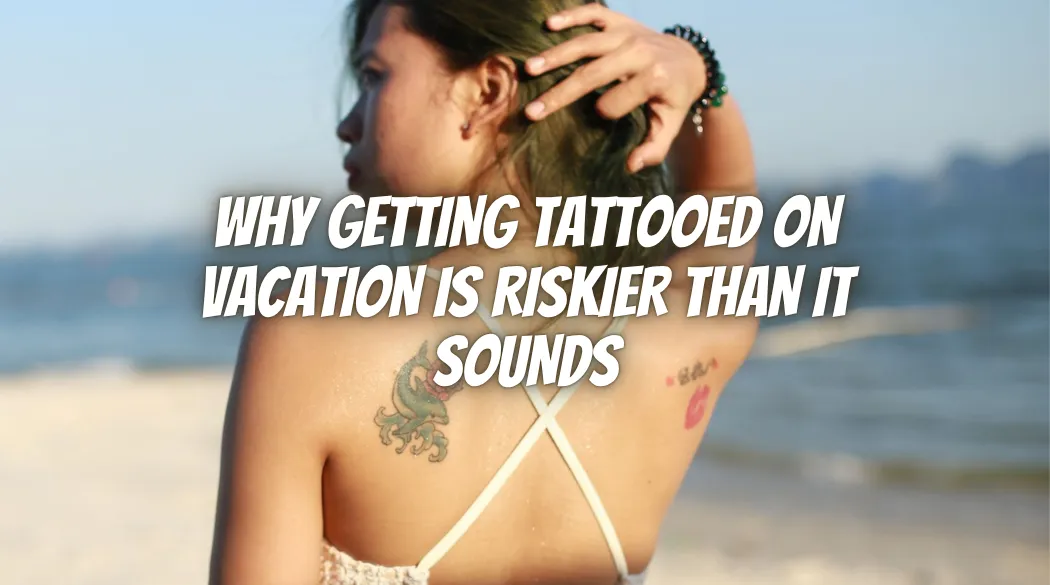
Why Getting Tattooed on Vacation Is Riskier Than It Sounds
You're on a beach somewhere at sunset, and a little shop down the street is offering tattoos for cash. It feels like the perfect souvenir, a permanent memory of the best week of your year. But that spur-of-the-moment ink can turn into a lifelong headache faster than your tan fades. A vacation tattoo is a permanent tattoo you get while traveling, often on impulse, from a studio you didn't research and an artist you'll never see again. That combination is exactly why it's riskier than it sounds.
At Ink Different Tattoos, we've spent 15 years training professional Tattoo Artists to do this work the right way, and we've heard the horror stories. Before you let a stranger permanently mark your skin between snorkeling trips, let's talk about what's really on the line.
Key Takeaways
Impulse risk: Vacation tattoos are often chosen on a whim, leading to high regret and cover-up rates.
Health hazard: Foreign studios may not follow OSHA-level hygiene standards, raising infection and bloodborne illness risk.
No follow-up: You leave before healing is done, so a distant artist can't fix problems or guide aftercare.
Legal gap: Many countries lack the licensing and inspection rules that protect you at home.
Better path: Learning the craft yourself through real training turns tattooing from a gamble into a skill.
What Is a Vacation Tattoo, Really?
A vacation tattoo is a piece of permanent body art you get while traveling, usually decided in the moment, from a studio you haven't vetted and an artist you can't return to. The romance of the setting often replaces the careful thought a permanent decision deserves.
The problem isn't travel itself. Plenty of world-class tattoo studios exist in tourist cities. The problem is the mindset. On vacation, your guard is down, your schedule is loose, and your judgment is often clouded by celebration. You skip the research you'd normally do at home.
You wouldn't buy a house on a whim during a beach day. Your skin is the only body you'll ever live in, so it deserves at least that much thought.
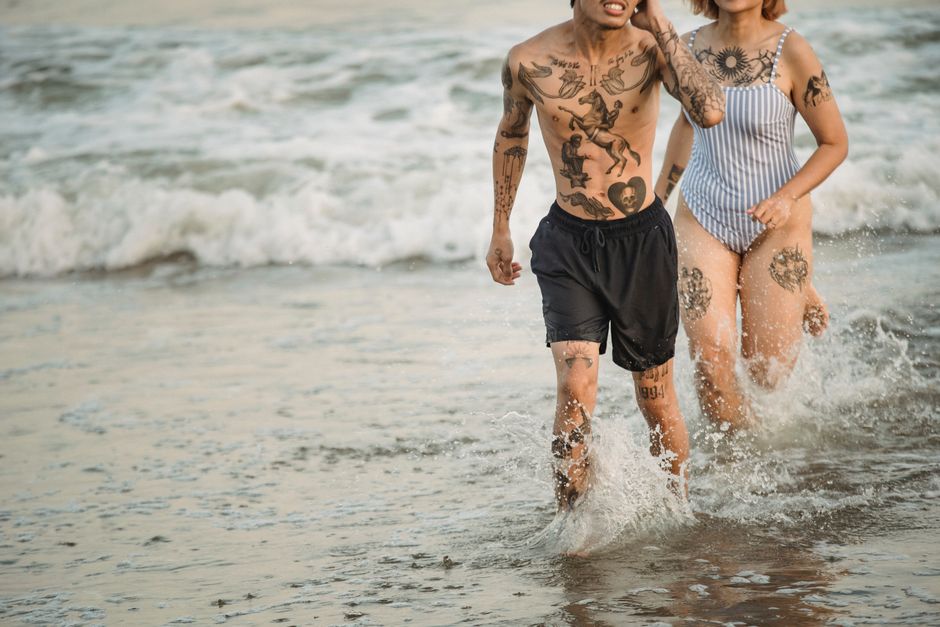
Why Is Getting Tattooed on Vacation Riskier Than It Sounds?
Getting tattooed on vacation is riskier because you combine impulse decisions, unfamiliar hygiene standards, a language barrier, and zero access to the artist once healing begins. Each of those factors alone is a red flag; together, they stack the deck against you.
Think of it like planting a seed in soil you've never tested. At home, you know your climate, your ground, your gardener. Abroad, you're guessing on all three and hoping something beautiful grows anyway.
Here's what quietly works against you on that beach:
Impulse over intention: Vacation energy pushes you to decide fast, not wisely.
Language barriers: Miscommunication about placement, size, or aftercare is common.
No return visits: Touch-ups and healing checks are impossible from another country.
Unknown reputation: You can't verify the artist's training or track record.
What Are the Health Risks of a Vacation Tattoo?
The biggest health risks of a vacation tattoo are infection, allergic reactions, and exposure to bloodborne diseases like hepatitis B, hepatitis C, and HIV when equipment isn't properly sterilized. These are not scare tactics; they're documented realities in poorly regulated studios.
In the United States, professional studios follow strict hygiene protocols aligned with OSHA bloodborne pathogen standards: single-use needles, sterilized equipment, and proper barrier protection. In many vacation destinations, those standards are inconsistent or unenforced.
Then there's healing. A fresh tattoo is an open wound. According to the American Academy of Dermatology, sun exposure, ocean water, and pool chemicals can all damage a new tattoo and invite infection. Guess what a beach vacation is full of? Sun, salt water, and chlorine. You'll be tempted to jump right back in, and that's exactly what your healing skin can't handle.
Warning: A new tattoo should stay out of oceans, pools, and direct sun for at least two to four weeks. A vacation is the worst possible time to commit to that.
Are Foreign Tattoo Studios Held to the Same Standards?
No. Many countries and even some regions lack the licensing, inspection, and record-keeping requirements that protect clients in regulated markets, so you have little recourse if something goes wrong.
At home, a licensed tattoo artist has usually completed formal training and passed health and safety certification. If you get an infection or a botched piece, there's an accountability system. Abroad, that paper trail often doesn't exist. You can't file a complaint with a licensing board that isn't there.
Licensing rules also vary dramatically from place to place, even within the United States. If you're curious how structured the process really is where the standards are high, check out guides like how to get your tattoo license in Texas or how long a tattoo license takes in Colorado. That level of oversight is exactly what a random beach shop may skip entirely.
Why Do So Many People Regret Vacation Tattoos?
People regret vacation tattoos because impulse decisions rarely age well, and a design tied to one week of your life can feel disconnected once you're back to reality. The story that made it meaningful fades faster than you'd think.
Add poor execution to the mix, and regret compounds. Blown-out lines, crooked placement, and misspelled words are common when an artist rushes a tourist who won't be around to complain. Then comes the expensive, painful road of laser removal or a cover-up.
Great tattoos are collaborations built on trust and time. That's true whether you're getting one or giving one. If you're drawn to the craft, understanding what separates a professional from a boardwalk operator matters. Our guide on mistakes aspiring tattoo apprentices should avoid shows just how much skill and discipline good work demands.
How Can You Protect Yourself If You Still Want the Ink?
If you still want ink from your travels, protect yourself by researching the studio ahead of time, confirming hygiene practices in person, and waiting until you're home to heal properly. A few disciplined steps turn a gamble into a reasonable choice.
Follow this simple checklist before you ever sit in the chair:
Step 1: Research first. Read reviews, view healed work (not just fresh photos), and confirm the artist's reputation before your trip.
Step 2: Inspect in person. Look for single-use needles opened in front of you, gloves, barrier film, and a clean, organized station.
Step 3: Ask about sterilization. A reputable studio will proudly explain their autoclave process and disposal practices.
Step 4: Plan your healing. Schedule the tattoo for the end of your trip so ocean and sun don't sabotage the wound.
Step 5: Follow aftercare exactly. Keep it clean, covered, and out of the water until it's fully healed.
Better yet, consider waiting until you're home, where you can build a relationship with a trained professional who'll stand behind their work. The best tattoos aren't rushed souvenirs; they're deliberate decisions.
What If You Want to Be the One Holding the Machine?
If reading about botched vacation tattoos makes you think you could do it better, that instinct might be pointing you toward a real career, one where you're the trusted professional instead of the risky stranger.
Maybe you're stuck in a job that drains you. Maybe your creative potential has been sitting on a shelf collecting dust while you clock in and out of work that means nothing to you. That restlessness is a signal, not noise.
Tattooing is one of the most human, hands-on crafts left standing. It can't be automated away. As we explain in why tattoo artists are still essential, this is an AI-proof career built on trust, skill, and human connection. The Bureau of Labor Statistics tracks steady demand for craft and fine artists, and skilled tattoo artists sit right in that lane.
Here's the truth: the same discipline that separates a safe studio from a beach scam is exactly what you learn in a real tattoo apprenticeship. This is why more people are treating tattoo apprenticeships as a college alternative.
What You Can Expect From Our Traditional Tattoo Apprenticeship
Ink Different's Traditional Tattoo Apprenticeship is an 18 to 24 month, four-phase program built for beginners, with personalized hands-on instruction, licensing support, and job-ready skills by the time you finish.
You build your foundation, then finish in real tattoo studios where the craft actually happens. No prior art experience needed. We meet you where you are and grow you from there, like tending a seed until it's ready to stand on its own.
How Do You Gain Confidence as a New Tattoo Artist?
You build confidence through structured, hands-on mentorship from professionals who teach you every step, from design to needlework to client care. By the end of the program, you'll have the job-ready skills and licensing support to work as a professional Tattoo Artist, along with a guaranteed job offer. What we give you is a real path: the training, mentorship, and support to earn your place in this industry.
Who Are the Mentors in the Master Mentorship Program?
Our one-year, in-person Master Mentorship pairs you with celebrity and award-winning Master Mentors like Al Fliction, Liz Cook, Kyle Dunbar, Boneface, and Jordi Pla. It's built for mastering a specific style, exploding your career, and stepping into business ownership.
How Does Ink Different Make Tattoo Training Accessible?
We offer Spanish-speaking locations in Denver, Orange County, NYC, Miami, San Antonio, and San Diego, so language never stands between you and this craft. Our "Good Humans" culture means you join a supportive, family-like community, not a factory. Live, in-person mentorship is our difference, and seats are always limited because real mentorship can't be mass-produced.

Ready to Become a Tattoo Artist?
A vacation tattoo is a gamble on your skin, your health, and your future. But there's a bigger decision hiding underneath your fascination with ink: what if you stopped watching from the chair and picked up the machine yourself? What if this restless feeling is the first step toward a career you actually want?
Ready to become a tattoo artist? Apply now to Ink Different's Traditional Tattoo Apprenticeship and start building an AI-proof career with licensing support along the way. Not sure yet? Fill out our quick questionnaire to get personalized support and find out if our tattoo apprenticeship is right for you.
Frequently Asked Questions
Is it safe to get a tattoo on vacation?
It can be, but only if the studio follows strict hygiene standards and you plan around healing. Impulse tattoos from unvetted foreign shops carry higher risks of infection and regret.
Can you swim after getting a tattoo?
No. Keep a new tattoo out of oceans, pools, and hot tubs for at least two to four weeks, since water can introduce bacteria into the healing wound.
What diseases can you get from an unsanitary tattoo?
Unsterilized tattoo equipment can transmit hepatitis B, hepatitis C, and HIV, plus bacterial skin infections. Proper single-use needles and sterilization prevent this completely.
Do I need art experience to start a tattoo apprenticeship?
No. Ink Different's Traditional Tattoo Apprenticeship is built for beginners with no prior art experience and teaches drawing and technique fundamentals from day one.
How long does the Ink Different Tattoo Apprenticeship take?
The Traditional Tattoo Apprenticeship takes 18 to 24 months across four phases. You start remotely to build fundamentals and finish hands-on in professional tattoo studios.
What makes Ink Different different from other training?
Ink Different offers live, in-person mentorship from award-winning mentors, a 15-year track record, licensing support, and a supportive "Good Humans" community across nationwide locations.