Why People Get Tattooed After Major Life Events
Think about the moment a chapter of your life closed forever: the loss, the win, the goodbye, the fresh start. For millions of people, that moment doesn't fade into memory. It gets carved into skin, permanent proof that they survived, celebrated, or transformed. A milestone tattoo is a piece of body art created to commemorate a major life event, turning a personal turning point into a permanent, visible marker of growth, loss, love, or resilience. At Ink Different Tattoos, we've watched artists translate grief, joy, and rebirth into ink for over 15 years, and it's some of the most meaningful work in the world.
If you feel that pull toward the meaning behind the machine, keep reading. Understanding why people get tattooed after major life events is a good place to start if you're considering a career that no algorithm can replace.
Key Takeaways
The reason: People get tattooed after major life events to memorialize loss, celebrate milestones, and mark personal transformation.
Common triggers: Births, deaths, weddings, divorces, recovery, and survival often inspire commemorative tattoos.
The psychology: Marking a life event on skin gives grief and growth a permanent, tangible form of closure.
The career: Tattoo Artists carry deep emotional trust, making the craft an AI-proof, human-centered profession.
Your path: Ink Different Tattoos trains beginners through an 18–24 month Traditional Tattoo Apprenticeship with licensing support.
What Are Milestone Tattoos?
Milestone tattoos are commemorative tattoos designed to permanently mark a significant moment or turning point in a person's life, translating an experience that lives in the heart into an image that lives on the body. Unlike a spontaneous design chosen off a wall, a milestone tattoo carries weight. It might be a date, a name, a set of coordinates, or a symbol only the wearer fully understands. Each one is a small monument to a moment that changed everything.
These tattoos have deep roots. Humans have marked their skin to record births, battles, and rites of passage for thousands of years. The tools evolved, but the reason never did: people want to hold onto what matters most.
Why Do People Get Tattooed After Major Life Events?
People get tattooed after major life events because ink gives a fleeting, emotional moment a permanent physical form they can carry and revisit for the rest of their lives. A major life event rearranges who you are. When someone survives illness, buries a parent, or holds a newborn for the first time, words often fall short. A tattoo becomes a language the skin can speak.
There's also control in the choice. Life throws chaos at us: we rarely choose when we lose someone or when everything changes. But choosing to sit in a chair and mark that moment on your own terms is an act of ownership. It says, "This happened to me, and I decide what it means."
Consider this: When you become a Tattoo Artist, you're not just applying ink. You're helping someone reclaim a piece of their story.
What Life Events Most Often Lead to a Tattoo?
The most common life events that lead to tattoos are the death of a loved one, the birth of a child, recovery from addiction or illness, marriage, divorce, and major personal reinventions. Each of these moments carries a different emotional charge, and each shows up in the tattoo chair in its own way:
Loss and memorial: Names, dates, portraits, and handwriting from a loved one who passed.
New life: Birth dates, footprints, or a child's first drawing.
Recovery and survival: Semicolons, sobriety dates, and symbols of resilience after illness.
Love and union: Wedding coordinates, matching pieces, or anniversary symbols.
Endings and freedom: Divorce, graduation, moving countries, or leaving a job that drained you.
That last one might hit close to home. Plenty of people mark the day they finally walked away from an unfulfilling career and chose something that lit them up. If you've been feeling that itch yourself, our post on making a career change through a tattoo apprenticeship is worth a read. Many also find that understanding why spring is the best time to become a tattoo artist helps them seize the moment.
Why Does Marking Grief or Growth on Skin Help?
Marking grief or growth on skin helps because it externalizes an internal experience, creating a tangible focus point that supports emotional processing and closure. Psychologists have long noted that ritual helps humans cope with change. Getting tattooed is a modern ritual: it has anticipation, a little pain, a marked passage of time, and a permanent result. That structure gives the mind something to hold onto.
Research on grief and continuing bonds shows that maintaining a connection to what we've lost can be part of healthy healing. A memorial tattoo does exactly that: it keeps the bond visible instead of buried. For the person in the chair, the ink often becomes a place to return to. On hard days, they touch it. On good days, they show it off. It's a physical anchor in a world that keeps moving.
How Does a Tattoo Artist Turn a Life Event Into Ink?
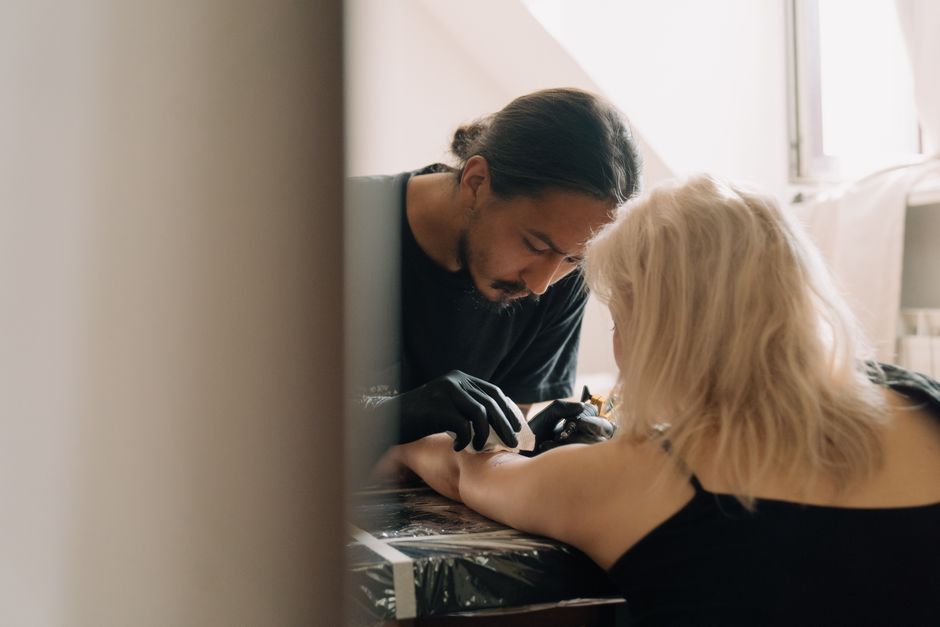
A Tattoo Artist turns a life event into ink by listening deeply, translating emotion into imagery, and executing the design with technical skill and safe, hygienic practice. This is where the craft becomes something bigger than drawing. A skilled artist is part designer, part interpreter, and part trusted confidant. Here's how that process usually unfolds:
Step 1: Listen. The artist draws out the story behind the request, asking about the person, the moment, and the feeling they want to keep.
Step 2: Translate. They convert that story into visual language: symbols, composition, style, and placement that fit the meaning.
Step 3: Design. A custom drawing is built and refined until it matches the emotional weight of the event.
Step 4: Execute safely. Following strict hygiene standards like the OSHA bloodborne pathogen standards, the artist tattoos the piece with precision.
Step 5: Guide aftercare. The artist teaches proper healing, following trusted guidance like the American Academy of Dermatology tattoo care guidelines.
Notice how much of that is human. Empathy, interpretation, and hands-on skill cannot be automated. That's exactly why tattooing remains an AI-proof career where Tattoo Artists stay essential.
How Can You Turn This Meaning Into a Career?
You can turn this meaning into a career by pursuing structured, hands-on Tattoo Artist Training that teaches drawing, machine skills, safety, and the art of connecting with clients on a human, emotional level. Maybe you feel stuck. Maybe you're clocking into a job that drains your creative fuel and gives nothing back. That restlessness is a signal, not a flaw. It's the same pull that leads people to the tattoo chair after a major life event: the need for something that actually means something.
Here's the truth we've learned over 15 years: you don't need to be a lifelong artist to start. You need a real willingness to learn and a Mentor who's walked the path. The rest is trainable. If you're curious about what to avoid on the way in, read our guide on mistakes aspiring tattoo apprentices should avoid.
Ink Different Tattoos exists as a college alternative for people exactly like you. We're the wise guide; you're the hero. And more people are choosing this path than ever, treating tattoo apprenticeships as a serious alternative to college.

What Does the Traditional Tattoo Apprenticeship Offer?
The Traditional Tattoo Apprenticeship at Ink Different Tattoos is an 18- to 24-month, four-phase Tattoo Artist training program that takes beginners from their first line to job-ready professional skills. This is not a weekend crash course. It's real, personalized, hands-on training built for people who want to do this the right way. Here's what you can expect:
Beginner-friendly: No prior experience needed. We teach fundamentals from day one.
Start remote, finish in studios: Build your foundation, then move into a working Tattoo Studio.
Four-phase structure: Progressive training that builds real skill, one layer at a time.
Licensing support: We guide you toward the credentials your state requires, whether that's your tattoo license in Texas or how long a tattoo license takes in Colorado.
Job-ready skills: You graduate prepared to work professionally in the field.
According to the Bureau of Labor Statistics, craft and fine artists earn income across a wide range, and skilled, specialized artists tend to command the most. Tattooing rewards mastery, and mastery is exactly what our four-phase training is designed to build. Ready to take the next step? See how to start your tattoo apprenticeship this spring.
Remember: Seats in live, in-person Tattoo Artist Training are limited by nature. The sooner you plant the seed, the sooner it grows.
What Is the Master Mentorship Program?
The Master Mentorship is a one-year, in-person program where you train directly with celebrated award-winning Mentors to master a style, grow your career, and build your own professional brand. If you're a beginner ready to go all-in, or an experienced artist hungry to level up, this is your accelerator. You'll learn alongside names the industry respects, including Al Fliction, Liz Cook, Kyle Dunbar, Boneface, and Jordi Pla.
This program is intensive and focused on serious skill development and business ownership.
Is Training Available in Spanish?
Yes. Ink Different Tattoos offers Spanish-speaking tattoo apprenticeship locations, so language is never a barrier to building an AI-proof career. You can find Spanish-speaking training in Denver, Orange County, NYC, Miami, San Antonio, and San Diego. Wherever you are, our "Good Humans" culture travels with the training: a supportive, family-like community that has your back from your first line to your last day in the chair.
Ready to Become a Tattoo Artist?
If reading about why people get tattooed after major life events stirred something in you, that's worth paying attention to. The people in that chair chose to mark their story permanently. This might be your own turning point.
Ready to become a Tattoo Artist? Apply now to Ink Different's Traditional Tattoo Apprenticeship and start building an AI-proof career, with licensing support along the way. Prefer to test the waters first? Fill out our quick questionnaire to get personalized support and find out if our Traditional Tattoo Apprenticeship is right for you.
Frequently Asked Questions
Why do people get tattooed after major life events?
People get tattooed after major life events to give emotional moments a permanent physical form, memorialize loss, celebrate joy, and mark personal transformation on their own terms.
Do I need art experience to become a Tattoo Artist?
No. Ink Different's Traditional Tattoo Apprenticeship is built for beginners and teaches drawing fundamentals, machine skills, and safety from day one. A willingness to learn matters most.
How long does the Traditional Tattoo Apprenticeship take?
The Traditional Tattoo Apprenticeship at Ink Different Tattoos takes 18 to 24 months, following a four-phase structure. Your pace depends on how quickly you master each phase.
What makes Ink Different Tattoos unique?
Ink Different offers live, in-person mentorship, award-winning Mentors, a "Good Humans" community, and over 15 years of experience training professional Tattoo Artists as a genuine college alternative.
Is tattooing an AI-proof career?
Yes. Tattooing relies on empathy, interpretation, and hands-on skill that automation cannot replicate, especially when creating meaningful commemorative tattoos after major life events.
Is Tattoo Artist Training available in Spanish?
Yes. Ink Different Tattoos offers Spanish-speaking training in Denver, Orange County, NYC, Miami, San Antonio, and San Diego, so language never blocks your path.