Why Tattoos on Hands and Fingers Fade So Much Faster
Hand and finger tattoo fading is the accelerated loss of ink clarity and saturation on the hands, fingers, and palms, caused by thin skin, rapid epidermal cell turnover, and constant friction from daily life.
At Ink Different Tattoos, we teach aspiring Tattoo Artists exactly why this happens so they can set honest expectations with clients and deliver work that holds up over time.

Key Takeaways
Root cause: Hands fade fast because of thin skin, fast cell turnover, and daily friction from washing, gripping, and sun exposure.
Cell turnover: Hand skin regenerates quickly, pushing pigment outward faster than most protected body areas.
Touch-ups needed: Finger tattoos often need touch-ups within one to two years to maintain clarity and design integrity.
Artist skill is critical: Proper depth and needle control from a trained Tattoo Artist dramatically improves longevity and fading resistance.
Client habits matter: Sun protection, moisturizing, and gentle handling slow fading significantly; plan for periodic refreshes.
Why do hand and finger tattoos fade so much faster?
Hand and finger tattoos fade faster because the skin there is thin, exposed to constant friction, regenerates rapidly, and receives unprotected sun exposure every single day. Every wash, grip, and handshake works against the ink.
Think of your skin like soil. In some spots the ground is deep and rich, holding a seed for years. On your hands, the soil is shallow and constantly disturbed. The pigment simply doesn't have the same stable ground to settle into.
This isn't a flaw in your tattoo or a mistake by your Tattoo Artist. It's biology. But knowing the biology gives both you and your artist the power to plan smarter and set realistic expectations from the start.
What makes the skin on your hands so different?
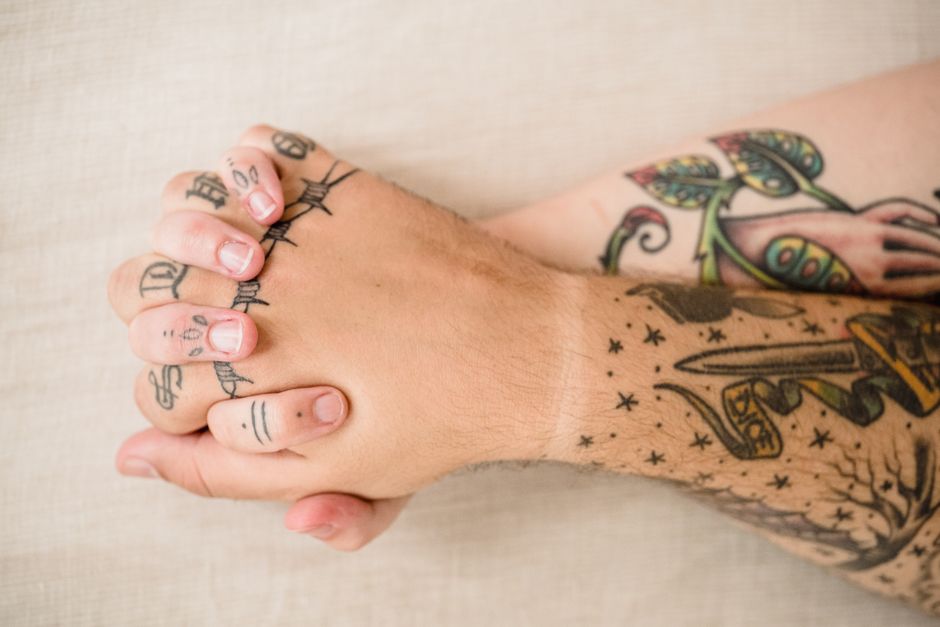
The skin on your hands and fingers has a thinner dermis, fewer stable pigment-holding layers, and one of the fastest cell turnover rates on the entire body, which pushes ink out over time. That combination creates a hostile environment for permanent ink.
When a Tattoo Artist places ink, the goal is to reach the dermis. The deeper layer where pigment stays locked in place. On your palms and fingers, that layer is shallow and unpredictable. According to the American Academy of Dermatology tattoo care guidelines, skin structure and healing behavior vary significantly across the body, which directly affects how tattoos settle and age.
Your hands also shed and rebuild skin cells rapidly. The epidermis (outer skin layer) completely renews approximately every 28 days on the body, but on your hands, that cycle runs even faster due to constant exposure and friction. As those cells rise to the surface and flake away, they carry tiny amounts of pigment with them. Over months, that adds up to noticeable fading.
Pro Tip: The side and top of the finger hold ink slightly better than the palm-facing surface. A skilled Tattoo Artist will discuss placement with you before the needle ever touches skin.
How does everyday life wear down finger ink?
Your hands endure more friction, moisture, and sun exposure than any other body part, and each of these accelerates tattoo fading and pigment breakdown. Simply living your life wears the ink down in multiple ways.
Consider everything your hands do in a single day: washing, gripping, typing, cleaning, carrying, gesturing. Each action creates micro-friction against the outer skin layer. Now add frequent hand-washing and sanitizer, both of which dry and exfoliate the skin, potentially removing surface ink particles.
Then there's the sun. Your hands are almost never covered, so ultraviolet light breaks down pigment faster than on protected areas. Ongoing UV exposure is a proven cause of pigment breakdown, which is why sun protection matters for tattoo longevity everywhere on the body, but especially on hands.
Friction: Daily gripping and rubbing physically wears down the top skin layer and disturbs pigment particles.
Water and soap: Frequent washing dries and exfoliates finger skin, removing surface pigment over time.
Sun exposure: Unprotected hands take the most UV damage of any body area, breaking down ink molecules.
Movement: Constant flexing at the joints stretches and strains the ink, redistributing pigment particles.
Why does the artist matter more here than anywhere else?
Hand and finger tattoos punish inexperience because they demand precise needle depth, steady hand control, and honest client communication, skills that only come from real, supervised training. The margin for error is razor-thin.
Go too shallow, and the ink fades within weeks, leaving a ghost image. Go too deep, and it blows out, blurring into a gray smudge under the skin. On the hands, that window between too shallow and too deep is tighter than almost anywhere else on the body. This is where the gap between a hobbyist and a professionally trained Tattoo Artist becomes obvious to every client who looks at their hands.
A well-trained artist also knows when to say no, or when to steer you toward a bolder design that will age gracefully. Learning that judgment, like how to read skin, anticipate fading, and communicate limitations is one of the many things new artists overlook. Understanding hand tattoo challenges is part of becoming a professional.
How can you make a hand tattoo last longer?
You can extend the life of a hand tattoo through proper aftercare, consistent sun protection, gentle handling, and planning for periodic touch-ups every one to two years. Longevity is a partnership between your habits and your artist's skill.
Fading isn't fully avoidable on the hands, but you can slow it down dramatically. Here's a simple step-by-step approach any client can follow to protect their investment.
Step 1: Follow aftercare exactly. Keep the fresh tattoo clean and moisturized, and never pick at scabs. Proper healing locks in more pigment and supports better long-term color retention.
Step 2: Protect from the sun. Once healed, apply broad-spectrum SPF 30+ sunscreen to your hands daily to slow UV pigment breakdown. Reapply after washing.
Step 3: Moisturize consistently. Use fragrance-free lotion on your hands daily. Hydrated skin holds color better and looks sharper for longer.
Step 4: Minimize harsh friction. Wear gloves for heavy manual work, gardening, or cleaning when you can to reduce physical wear on the tattoo.
Step 5: Schedule touch-ups. Plan for a refresh every one to two years to keep the design crisp and readable. A quick refresh keeps your tattoo looking intentional.
Following workplace and studio hygiene standards during healing matters too. The OSHA bloodborne pathogen standards are the same principles professional Tattoo Studios follow to keep every session clean and safe, which supports better healing outcomes and reduces infection risk.
Where do you learn to tattoo tricky areas like this?
You learn to tattoo challenging areas like hands and fingers through hands-on, in-person mentorship from experienced Tattoo Artists under real studio conditions, not from videos, online courses, or guesswork. Real technical skill is built under real supervision and feedback.
Maybe you're reading this because you're tired. Tired of a job that drains you, tired of watching your creative potential collect dust, tired of feeling like the years are slipping by. That restlessness is a signal. It means it's time to plant a seed somewhere it can actually grow.
Tattooing is one of the few careers that can't be automated, outsourced, or replaced by a machine. It's deeply human, and it's growing. The Bureau of Labor Statistics tracks craft and fine artists as a real, working profession, and tattooing sits firmly in that hands-on, human-driven world. We break down exactly why in our piece on why Tattoo Artists are still essential.
For over 15 years, since our founding in 2011, Ink Different Tattoos has trained aspiring artists to master the craft, including the tricky, technical work that separates professionals from amateurs. Many people are discovering that tattoo apprenticeships are a solid alternative to college, and for good reason. You earn while you learn, gain real-world skills, and build a recession-proof career.
What can you expect from our Traditional Tattoo Apprenticeship?
Ink Different's Traditional Tattoo Apprenticeship is an 18- to 24-month, four-phase program that takes you from complete beginner to job-ready professional with licensing support in your state.
You don't need any prior art experience to begin. We built this tattoo apprenticeship for people starting from scratch, guiding you through fundamentals with personalized, hands-on training in real tattoo studios, learning under real working conditions with live Mentors.
Phase-based structure: Four progressive phases build your foundation, then your confidence, then your independence, then your specialty mastery.
Beginner-friendly: No formal art background required. We teach you the craft from the ground up, covering anatomy, design, safety, and business.
Live, in-person mentorship: You learn from experienced Tattoo Artists in real studios, not a screen. Real feedback, real corrections, real growth.
Licensing support: We help you navigate licensing requirements so you finish job-ready. See how licensing works in specific states, like how to get your tattoo license in Texas.
This is a career that comes with confidence: real, durable skills that hold up in a working studio, an AI-proof path that can't be outsourced, and a supportive "Good Humans" community that treats you like family, not a number.
How can Master Mentorship push you further?
Master Mentorship is a one-year, intensive in-person program where you train alongside award-winning and celebrity Mentors to master a specific style, explode your career, or build your own business.
If you already have some experience, or you want to go deeper faster, this is your accelerator. You learn directly from names like Al Fliction, Liz Cook, Kyle Dunbar, Boneface, and Jordi Pla.
Making Tattoo Training accessible for everyone
Ink Different offers Spanish-speaking locations so more aspiring artists can access professional Tattoo Artist Training in their own language and cultural context. You can train near you in Denver, Orange County, NYC, Miami, San Antonio, and San Diego.
Ready to become a Tattoo Artist?
That faded finger tattoo taught you something valuable: the craft is harder, deeper, and more skilled than it looks from the outside. Seats in our tattoo apprenticeship are limited.
Ready to become a Tattoo Artist? Apply now to Ink Different's Traditional Tattoo Apprenticeship and start building an AI-proof career with licensing support along the way. Or fill out our quick questionnaire to get personalized support and find out if the tattoo apprenticeship is right for you.
Frequently Asked Questions
Why do hand and finger tattoos fade so much faster than other tattoos?
Hand tattoos fade faster due to thin skin, rapid cell turnover, constant friction from daily activities, frequent washing, and unprotected sun exposure. These factors push pigment out faster than on protected body areas.
How long before a finger tattoo starts to fade?
Finger tattoos often show noticeable fading within six months to two years. Most professionals recommend scheduling touch-ups every one to two years to maintain clarity and design integrity.
Can you prevent a hand tattoo from fading completely?
You cannot fully prevent fading, but daily sunscreen, consistent moisturizing, gentle handling, and proper aftercare significantly slow it. Regular touch-ups keep the tattoo looking sharp and intentional.
Do I need art experience to join Ink Different's Traditional Tattoo Apprenticeship?
No. Ink Different's apprenticeship is built for complete beginners with no prior art background. We teach the craft from the ground up over 18 to 24 months with live mentorship.
How long does the Ink Different Tattoo Apprenticeship take?
The Traditional Tattoo Apprenticeship takes 18 to 24 months across four progressive phases. You start with remote foundational coursework and finish in working tattoo studios with in-person mentorship.
What makes Ink Different different from other tattoo training programs?
Ink Different offers live, in-person mentorship, 15+ years of experience since 2011, award-winning mentors, state licensing support, and a "Good Humans" community that treats you like family, not a student number.