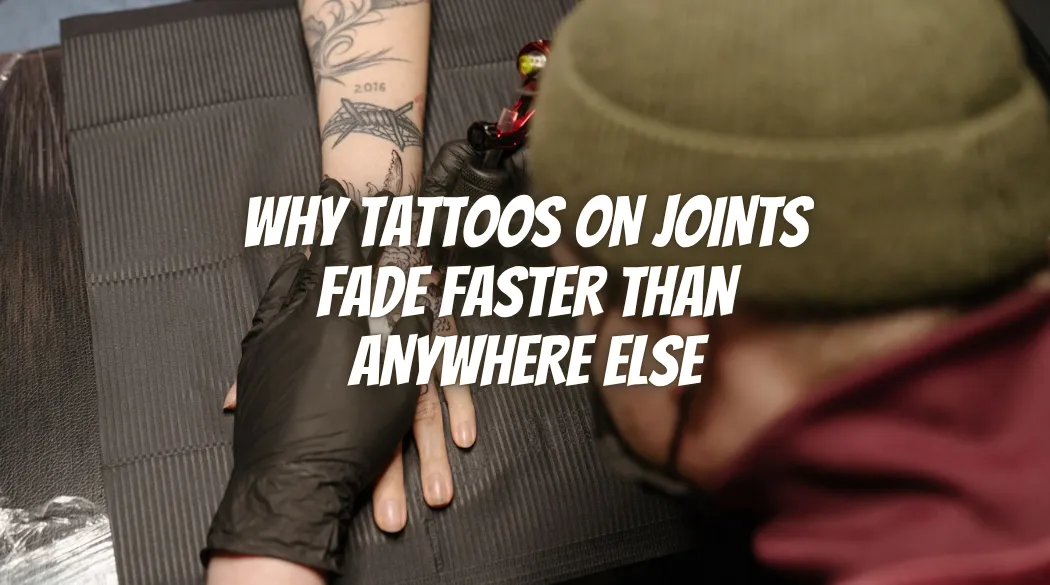
Why Tattoos on Joints Fade Faster Than Anywhere Else
You book a sleeve that wraps around your elbow, and six months later the ink over the joint looks like someone ran an eraser across it. It is one of the most common complaints clients bring to the chair, and understanding why it happens separates a hobbyist from a professional. A joint tattoo is a tattoo placed over high-movement areas like elbows, knees, knuckles, and ankles, where constant skin stretching and friction cause the ink to break down and fade faster than anywhere else on the body.
At Ink Different Tattoos, we have spent 15 years training professional Tattoo Artists to understand how skin behaves over time, because a great tattoo has to look good in 10 years, not just today.
Key Takeaways
Movement: Joints bend thousands of times daily, stretching skin and breaking down pigment faster than flat areas.
Friction: Clothing, rubbing, and sun exposure on elbows and knees accelerate fading over time.
Skin depth: Thin, uneven skin over joints makes consistent ink placement harder for inexperienced artists.
Prevention: Proper depth, aftercare, sun protection, and touch-ups keep joint tattoos crisp for years.
Skill matters: Experienced Tattoo Artists adapt technique to high-movement zones, something you learn through hands-on mentorship.
Why do tattoos on joints fade faster?
Tattoos on joints fade faster because the skin there stretches and flexes constantly, physically breaking down and dispersing the ink particles trapped in the dermis. Every bend of an elbow or knee works against the pigment.
Flat areas of the body, like your outer forearm or shoulder blade, stay relatively still. Joints are in motion all day long, every day. That motion creates micro-stress on the ink that simply does not exist on calmer parts of the body.
On top of the movement, joints take a beating from the outside world. Your elbows lean on desks, your knees press into floors, and your knuckles rub against everything. This constant friction wears down the outer layers of skin and the color beneath them.
Which body areas fade the fastest?
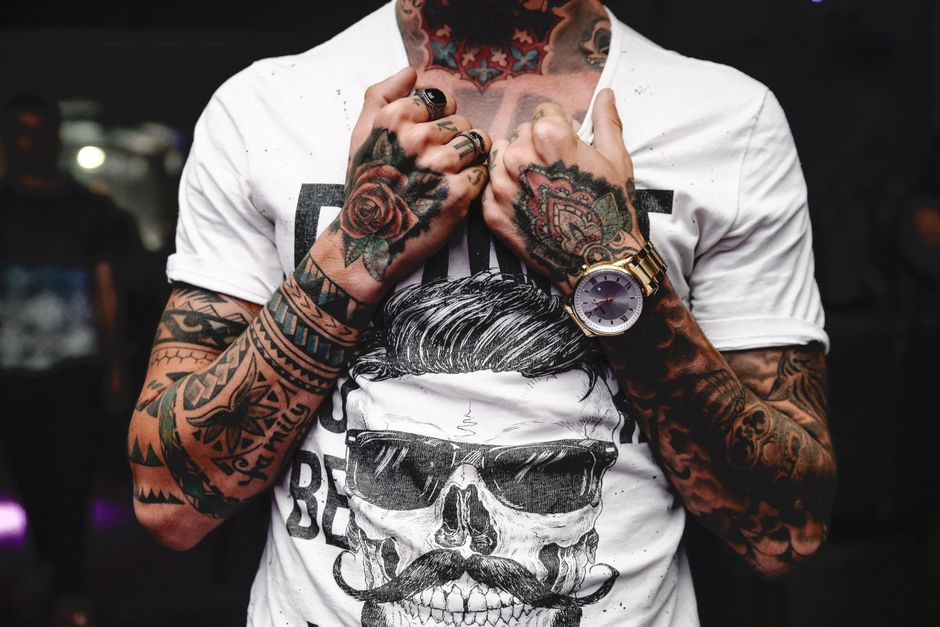
The fastest-fading tattoo locations are the fingers, knuckles, elbows, knees, feet, and the inner wrist, all high-movement or high-friction zones with thinner or frequently exposed skin.
Not all joints fade at the same rate, but they all share the same enemies: movement, friction, and exposure. Here is how the most common trouble spots typically rank:
Fingers and knuckles: The worst offenders, with constant movement and thin skin that holds ink poorly.
Feet and ankles: Rubbed by shoes and socks, often with limited blood flow for healing.
Elbows and knees: Textured, loose skin that stretches dramatically with every bend.
Inner wrist and palms: Thin skin plus frequent washing and handling.

What is the science behind joint tattoo fading?
Ink fades over joints because repeated skin stretching dislodges pigment from the dermis, while sun exposure and the body's natural immune response gradually absorb and scatter the remaining particles.
When you get a tattoo, pigment is deposited into the dermis, the stable middle layer of skin. Your immune system treats that pigment as a foreign invader and slowly works to break it down over your lifetime. That process happens everywhere, but it speeds up dramatically where the skin is in motion.
Ultraviolet light is another major factor. According to the American Academy of Dermatology tattoo care guidelines, sun exposure accelerates the breakdown of tattoo pigment, and joints like elbows and knees are often uncovered and sun-facing. Protecting your ink from UV is one of the simplest ways to extend its life.
Pro Tip: Once a tattoo is fully healed, apply broad-spectrum sunscreen over it any time it will be exposed. This single habit dramatically slows fading on joints.
How can you slow down fading on joints?
You can slow fading on joint tattoos by following proper aftercare, protecting the area from sun and friction, staying hydrated, and scheduling touch-ups every few years as needed.
You cannot stop your skin from moving, but you can control almost everything else. Here is a step-by-step approach to keeping your joint tattoos looking sharp for the long haul:
Follow aftercare exactly. Keep the fresh tattoo clean, moisturized, and protected during the critical healing window. Rushed healing on a joint means patchy ink.
Minimize movement early on. For the first couple of weeks, avoid overworking the joint so the skin can settle without cracking the healing scabs.
Shield it from the sun. Use sunscreen or cover the area once healed to block the UV damage that fuels fading.
Reduce friction. Wear looser clothing over new joint tattoos and avoid constant rubbing against hard surfaces.
Stay hydrated and moisturized. Healthy, supple skin holds pigment better than dry, cracked skin.
Book touch-ups. Even the best joint tattoo will likely need a refresh over the years. Plan for it rather than fighting it.
For more foundational knowledge on hygiene and healing standards, review the OSHA bloodborne pathogen standards that every reputable Tattoo Studio follows.
How does a skilled Tattoo Artist reduce fading?
A skilled Tattoo Artist reduces fading by controlling needle depth, adjusting technique for stretchy joint skin, choosing durable designs, and educating clients on aftercare, all skills built through hands-on training.
Much of what causes fast fading is technique, not just biology. Pack the ink too shallow and it fades in months. Go too deep and it blurs and blows out. Finding that sweet spot over a moving, textured joint takes real, repeated practice under a Mentor who has done it thousands of times.
Experienced artists also know how to design for longevity. Bold lines, thoughtful spacing, and the right color choices all help a joint tattoo age gracefully. This is craftsmanship that an algorithm cannot replicate, which is why tattoo artists are still essential in an AI-driven world.
If you are an aspiring artist, this is also where many beginners stumble. Learning to read skin and adapt your hand is one of the most important lessons, and it is covered in our guide on mistakes aspiring tattoo apprentices should avoid.
Where can you learn to tattoo joints the right way?
You learn to tattoo high-movement joints the right way through a live, in-person tattoo apprenticeship where experienced Mentors teach you how skin behaves and how to adapt your technique in real time.
You cannot learn this from a video. Reading skin, feeling needle depth, and adapting to each client's body is a hands-on craft that has been passed down from Mentor to apprentice for generations. That is the heart of what we do.
If you are in a job that drains you while your creative potential goes unused, that restlessness is worth listening to. Tattooing is a real, AI-proof career path, and the Bureau of Labor Statistics on craft and fine artists tracks craft and fine artists as a legitimate, skilled profession.
What does the Traditional Tattoo Apprenticeship include?
Ink Different's Traditional Tattoo Apprenticeship is an 18 to 24 month, four-phase tattoo apprenticeship that takes you from complete beginner to job-ready professional with licensing support along the way.
Here is what makes our apprenticeship a true college alternative:
Personalized hands-on training: You learn directly from experienced Mentors, not a pre-recorded course.
Start remote, finish in studios: Build your foundations, then move into real Tattoo Shops for live practice.
Built for beginners: No prior art experience is required. We plant the seed and help it grow.
Licensing support and job-ready skills: You finish prepared to work professionally and pursue your license.
Every Tattoo Apprentice becomes part of our "Good Humans" culture, a supportive, family-like community where you are never figuring it out alone.
A career that comes with confidence
When you finish our Traditional Tattoo Apprenticeship, you walk out with job-ready skills, licensing support, and a guaranteed job offer at one of our tattoo studios. You will know how to handle tricky areas like joints, read any client's skin, and build a loyal clientele. State licensing support is also part of the journey.
Mentorship that pushes your brand and skills further
If you want to go deeper, our one-year in-person Master Mentorship trains both beginners and experienced artists alongside celebrity and award-winning Mentors like Al Fliction, Liz Cook, Kyle Dunbar, Boneface, and Jordi Pla. It is built for mastering a specific style, growing your career, and owning your own business.
Making tattoo training accessible for everyone
Ink Different operates nationwide, with the Traditional Tattoo Apprenticeship available in 60+ locations, including Spanish-speaking locations in Denver, Orange County, NYC, Miami, San Antonio, and San Diego.
Ready to become a Tattoo Artist?
Joint tattoos fade faster because of movement, friction, and sun, but a trained hand knows how to work with the body, not against it. That knowledge is what separates a hobbyist from a professional, and it is what we have been teaching for 15 years. Seats in our hands-on apprenticeship are limited by design, because real mentorship cannot be mass-produced.
Ready to become a Tattoo Artist? Apply now to Ink Different's Traditional Tattoo Apprenticeship and start building an AI-proof career with licensing support along the way. Prefer to explore first? Fill out our quick questionnaire to get personalized support and find out if our Traditional Tattoo Apprenticeship is right for you.
Frequently Asked Questions
Why do tattoos on joints fade faster than other areas?
Joint tattoos fade faster because the skin constantly stretches and flexes with movement, physically breaking down pigment. Friction from clothing and surfaces plus sun exposure accelerate the process.
Which tattoo locations fade the fastest?
Fingers and knuckles fade fastest, followed by feet, ankles, elbows, knees, and inner wrists. These high-movement, high-friction, or thin-skinned areas break down ink more quickly.
Can you prevent a joint tattoo from fading?
You cannot stop fading entirely, but you can slow it with proper aftercare, sun protection, reduced friction, good hydration, and periodic touch-ups every few years.
Do I need art experience to become a Tattoo Artist?
No. Ink Different's Traditional Tattoo Apprenticeship is built for beginners and teaches drawing and technique fundamentals from day one, with no prior art background required.
How long does the Traditional Tattoo Apprenticeship take?
Our Traditional Tattoo Apprenticeship takes 18 to 24 months across four phases. You start remote, then finish in working Tattoo Studios with hands-on Mentor guidance.
What makes Ink Different different from other training options?
Ink Different offers live, in-person mentorship with award-winning Mentors, a nationwide network of studios, a supportive "Good Humans" culture, and 15 years training professional Tattoo Artists.