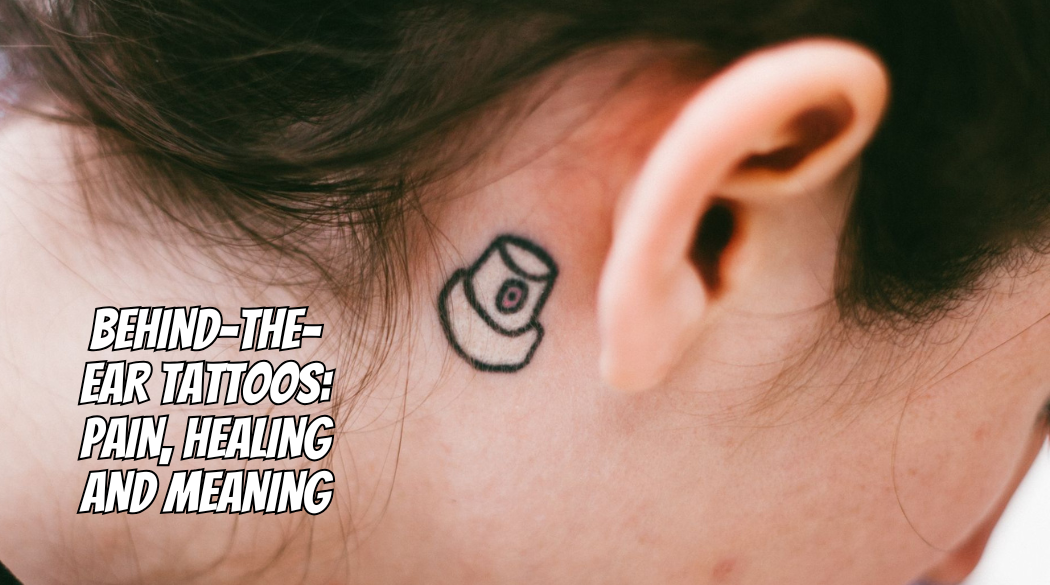
Behind-the-Ear Tattoos: Pain, Healing and Meaning
A behind-the-ear tattoo sits on the thin skin over the bone just behind your ear. It’s a popular spot for small, personal designs you can show or hide with your hair. Because there’s very little padding, it usually stings more than fleshier areas, but most designs are tiny, so sessions tend to be short. Healing usually takes about two weeks on the surface. Hair, pillows, glasses and earbuds can all rub the spot, so it needs a little extra care.
This guide is part of our tattoo placement series. It covers pain, healing, aftercare, meaning and design ideas for behind-the-ear tattoos.
Key Takeaways
Pain: Usually sharp, since the skin sits thin over the mastoid bone, but sessions for small designs are short.
Healing: About two weeks on the surface, with deeper healing taking up to six months.
Friction: Hair, pillows, glasses and earbuds can irritate the spot while it heals.
Meaning: Many people choose this spot for something private, like a name, date or small symbol.
Designs: Simple shapes and clean lines hold up better than tiny, highly detailed work.
Why Do People Choose Behind-the-Ear Tattoos?
Behind-the-ear tattoos are easy to keep private. Wear your hair down and the tattoo disappears. Pull it up and it’s on display.
The small, curved space suits minimal designs: a tiny star, a single initial, a small flower or a few fine lines. For many people, it’s a first tattoo, or a quiet addition to a larger collection.
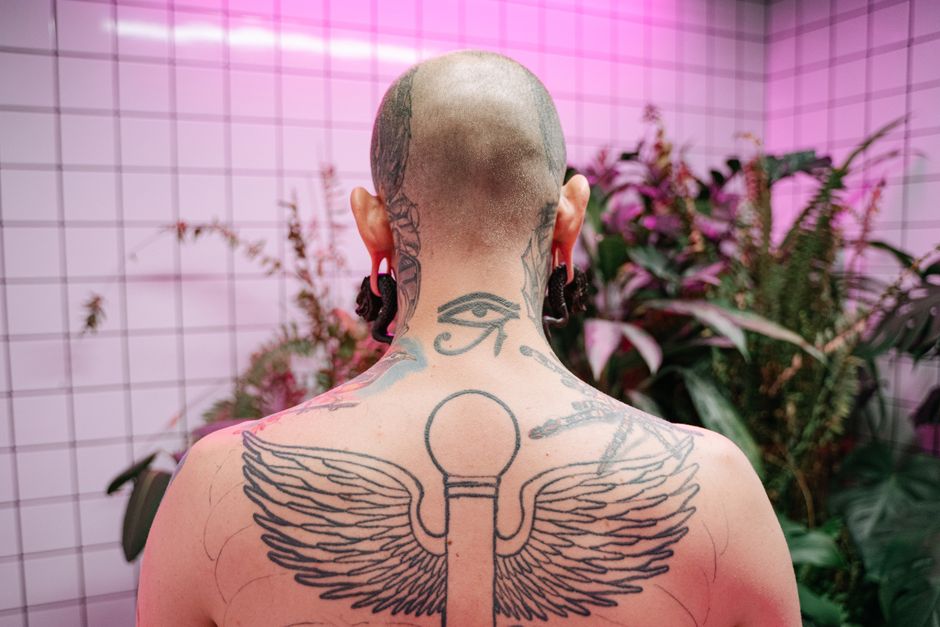
How much do behind-the-ear tattoos hurt?
Behind-the-ear tattoos usually hurt more than tattoos on fleshier areas. The skin is thin, there’s little fat underneath and the mastoid bone sits close to the surface.
Many people describe the feeling as sharp or buzzing, and some notice the vibration more than the needle itself, because the spot is so close to the ear. Pain is personal, though, and everyone experiences it a little differently.
The upside is time. Most behind-the-ear tattoos are small, so the session is often over quickly. Eating beforehand, getting good sleep and staying relaxed can help.
How long do behind-the-ear tattoos take to heal?
Most tattoos take about two weeks to heal on the surface, according to Mayo Clinic. Behind-the-ear tattoos can take a little longer if hair, pillows or glasses keep rubbing the area.
Deeper healing takes longer. Healthline notes that the skin below a tattoo can take as long as six months to fully heal.
How do you care for a behind-the-ear tattoo?
Keep it clean, moisturize lightly and keep friction away from the spot until it heals. Always follow your Tattoo Artist’s instructions first.
Wash gently. Use clean hands and a mild, fragrance-free soap, as often as your Tattoo Artist recommends.
Pat it dry. Use a clean paper towel, and don’t rub.
Moisturize lightly. The American Academy of Dermatology suggests a water-based lotion when tattooed skin feels dry.
Keep friction away. Tie long hair back, sleep on the other side and keep glasses arms and earbuds off the spot where you can.
Watch your hair products. Keep shampoo, conditioner, hairspray and dye off the tattoo while it heals.
Skip soaking and sun. Avoid pools and hot tubs, and keep the tattoo shaded until it’s healed.
If you notice spreading redness, increasing pain or swelling, pus or fever, contact a healthcare provider. Mayo Clinic notes that skin infections are possible after tattooing.
How Do Behind-the-Ear Tattoos Age Over Time?
Behind-the-ear tattoos are partly protected by hair, but they still get sun when your hair is up or short. The AAD notes that UV light can fade some tattoo inks, so sunscreen on the healed tattoo helps.
Very fine lines and tiny details can soften over the years on thin skin. Slightly bolder lines, simple shapes and a little extra spacing help a small design stay readable. Some people get a touch-up after healing, so ask your Tattoo Artist about their touch-up policy.
What do behind-the-ear tattoos mean?
There’s no single meaning. Behind-the-ear tattoos often hold personal significance, partly because the spot feels private and close to you.
Common reasons people choose this placement include:
Honoring someone: A name, initial, date or small symbol for a loved one.
A personal reminder: A word or tiny symbol only you know the story behind.
Protection or luck: Symbols like an eye, a crescent moon or a star.
A first tattoo: A small, low-commitment way to start.
Meaning is a big part of why people get tattooed. According to Pew Research Center, 69% of Americans with tattoos say they got at least one to honor or remember someone or something.

What Designs Work Best Behind the Ear?
Simple, clean designs make the most of this small space.
Small symbols: Stars, moons, hearts and tiny animals.
Initials and short words: Keep lettering simple and not too small.
Fine-line florals: A single stem or bloom that curves with the ear. Some Tattoo Artists draw botanicals freehand to fit the body, the way Eva Ronnova designs botanical tattoos around each client’s shape.
Musical notes and simple icons: Easy to read at a small size.
Why Does This Small Placement Take Real Skill?
A tiny design on a curved, bony surface leaves no room for wobbly lines or uneven lettering. Every small mistake shows.
An experienced Tattoo Artist knows how to keep line weight consistent, size lettering so it stays readable and place the design so it sits naturally behind the ear. Clean, simple linework is a core skill for new Tattoo Artists, and many learn it through classic styles with strict rules, like American Traditional flash. Professional tattoo studios also follow strict hygiene practices, like the OSHA Bloodborne Pathogens Standard.
That kind of precision comes from practice under a Mentor. Ink Different apprentice Joe Kendall talks about linework, depth and learning patience during Phase 2 of his training.
When choosing a Tattoo Artist for a behind-the-ear piece, look for healed photos of small, fine-line work in their portfolio.
Curious About Tattooing as a Career?
If learning about delicate placements has you thinking about tattooing professionally, Ink Different’s Traditional Tattoo Apprenticeship builds the precision small work requires, from drawing to supervised tattooing.
The Traditional Tattoo Apprenticeship runs 18 to 24 months across four phases, with in-person training at one of 60+ tattoo studios nationwide. No prior art experience is needed.
Phase 1, Art and Design Principles: Drawing, shading, digital design and building a portfolio.
Phase 2, Machine Mastery and Practice Tattooing: Hand-control exercises, machine operation, lining, shading and color packing.
Phase 3, Supervised Tattoos: Tattooing real skin under a Mentor’s direct supervision.
Phase 4, Junior Artist Externship: Building client relationships and refining your skills while you start earning.
You’ll finish with job-ready skills, licensing support and a guaranteed job offer at one of Ink Different’s own tattoo studios. Interest-free payment plans help make training more accessible. For many people, it’s a practical path into a creative career, which is part of why tattoo apprenticeships are gaining ground as an alternative to college.
For Tattoo Artists who want to go further, the one-year, in-person Master Mentorship offers training with Master Mentors like Jordi Pla, who left aerospace engineering for tattooing and has won 150 awards.
We also offer Spanish-speaking locations in Denver, Orange County, NYC, Miami, San Antonio and San Diego. Each Mentor takes just two tattoo apprentices per tattoo studio, so seats fill up quickly.
Ready to learn? Apply now to Ink Different’s Traditional Tattoo Apprenticeship, or fill out our quick questionnaire to see if it’s right for you.
Frequently Asked Questions
How painful is a behind-the-ear tattoo?
Usually fairly sharp, since the skin is thin over the bone. Most designs are small, so sessions are short.
How long does a behind-the-ear tattoo take to heal?
About two weeks on the surface for most tattoos. Deeper healing can take up to six months.
Can I wear glasses or earbuds after a behind-the-ear tattoo?
Yes, but try to keep them from resting on or rubbing the tattoo while it heals.
Do behind-the-ear tattoos fade?
Fine-line work can soften over time, especially with sun and friction. Sunscreen and occasional touch-ups help.
What do behind-the-ear tattoos mean?
It depends on the person. Many choose this spot for something private, like a loved one’s name, a date or a small symbol.
Can I dye my hair after getting a behind-the-ear tattoo?
Wait until the tattoo is fully healed, and keep hair dye and harsh products off the area in the meantime.