Shoulder Tattoos: Pain, Healing and Design Ideas
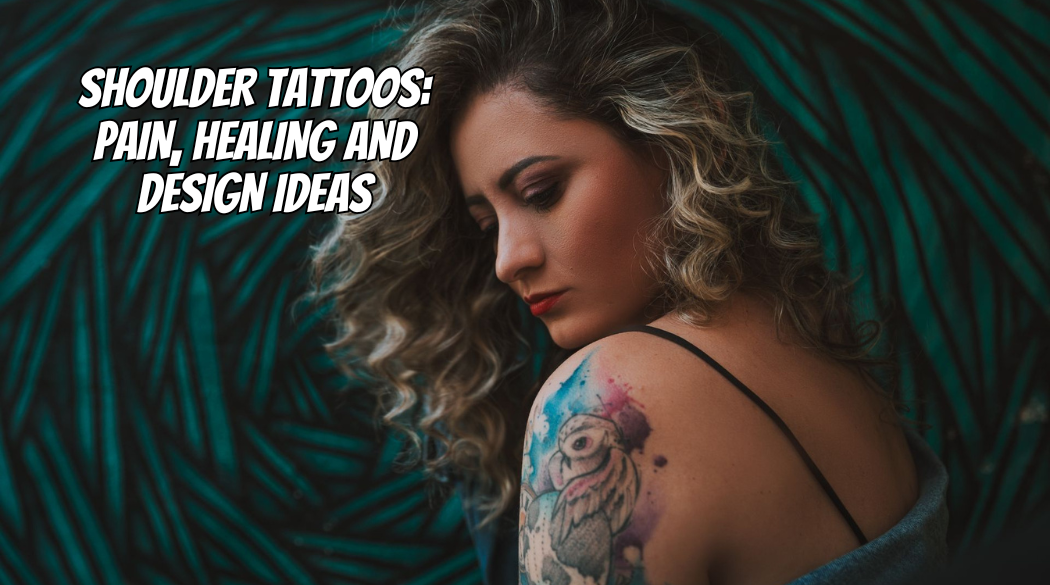
The shoulder is one of the most comfortable and versatile places to get tattooed. The deltoid muscle cushions the area, so the outer shoulder usually hurts less than bony spots like the collarbone or shoulder blade. Most shoulder tattoos heal on the surface in about two weeks, and the area's rounded shape suits everything from a small symbol to the start of a full sleeve. The main things to watch are bag straps rubbing the area while it heals and sun exposure afterward.
This guide is part of our tattoo placement series. It covers pain, healing, aftercare, long-term aging and design ideas for shoulder tattoos.
Key Takeaways
Pain: Usually low to moderate on the outer shoulder, and higher near the collarbone and over the shoulder blade.
Healing: About two weeks on the surface, with deeper healing taking up to six months.
Friction: Backpacks, purse straps and seatbelts can rub a healing shoulder tattoo.
Sun: Tank tops and swimsuits leave shoulders exposed, so sunscreen helps keep them bold.
Designs: Florals, mandalas, animals, lettering and sleeve starters all suit the shoulder's curve.
Why Do People Choose Shoulder Tattoos?
Shoulder tattoos are easy to show or cover. A T-shirt hides them, and a tank top shows them off.
The shoulder also works as a crossroads. A design can stand alone, flow up from a chest piece, extend across the shoulder blade or start a half or full sleeve. That flexibility makes it a popular choice for both first tattoos and larger long-term projects.

How Much Do Shoulder Tattoos Hurt?
Shoulder tattoos usually rank low to moderate in pain, especially on the outer shoulder, where the deltoid muscle provides padding.
Pain changes depending on placement:
Outer shoulder (deltoid): Usually one of the more comfortable spots.
Top of the shoulder: Can be a bit more sensitive near the bony point.
Near the collarbone: Often sharper, since the skin sits close to bone.
Shoulder blade: Can feel more intense over the bone.
Many people describe the outer shoulder as a scratchy, warm sensation. Pain is personal, so eating beforehand, staying hydrated and getting good sleep can help. That relative comfort is one reason the shoulder is a popular spot for a first tattoo.
How Long Do Shoulder Tattoos Take to Heal?
Most tattoos take about two weeks to heal on the surface, according to Mayo Clinic. Shoulder tattoos usually follow a similar timeline, though larger pieces can take longer.
Deeper healing takes longer. Healthline notes that the skin below a tattoo can take up to six months to fully heal.
During the first week, expect some redness and tenderness. Flaking and itching usually follow as the skin heals. Let the flakes fall off on their own.
How Do You Care for a Healing Shoulder Tattoo?
Keep it clean and lightly moisturized, protect it from friction and keep it out of the sun while it heals. Always follow your Tattoo Artist's instructions first.
Wash gently. Use lukewarm water and a mild, fragrance-free soap, then pat dry.
Moisturize lightly. The American Academy of Dermatology suggests a water-based lotion when tattooed skin feels dry.
Avoid friction. Skip backpacks and shoulder bags on that side, and adjust seatbelts so they don't rub the tattoo.
Sleep on the other side. Avoid lying on the fresh tattoo for the first several nights.
Avoid soaking. Skip baths, pools and hot tubs until it's healed. The CDC advises people with new tattoos to stay out of saltwater and brackish water if possible.
Keep it out of the sun. Cover it or stay in the shade while it heals.
If you notice spreading redness, increasing pain or swelling, pus or fever, contact a healthcare provider. Mayo Clinic notes that skin infections are possible after tattooing.
How Do Shoulder Tattoos Age Over Time?
Shoulder tattoos generally age well, since the area has good padding and isn't a high-friction joint like the hands or feet. The biggest long-term factor is sun.
Shoulders get plenty of sun in tank tops and swimsuits. The AAD notes that UV light can fade some tattoo inks, so applying sunscreen to your healed tattoo whenever it's exposed helps keep lines crisp and colors bright.
Muscle gain or weight changes can also stretch the skin over time. Designs with bold lines and good spacing tend to adapt well.
What Are the Best Shoulder Tattoo Design Ideas?
Designs that follow the shoulder's curve tend to look the most natural.
Florals and botanicals: Roses, peonies and vines drape nicely over the deltoid. Some Tattoo Artists draw botanicals freehand to fit the body, the way Eva Ronnova designs botanical tattoos around each client's shape.
Mandalas and geometric work: Circular designs mirror the shoulder's rounded shape.
Animals and portraits: Lions, wolves and koi make a bold statement.
Script and lettering: Words or names that follow the shoulder line.
Sleeve starters: A shoulder cap that can grow into a half or full sleeve.
If you're thinking about a sleeve, start with a plan. Ink Different Master Mentor Boneface is known for full sleeve projects, from a horror-themed sleeve to an elephant and lotus sleeve with soft gradient shading, as described in his style and teaching profile.
Tattoos are common, and many people add to them over time. According to Pew Research Center, 32% of Americans have a tattoo, and 22% have more than one.

Why Does Placement Skill Show on the Shoulder?
The shoulder is curved and muscular, so a design has to be placed and sized to wrap the deltoid and still look balanced from every angle.
A stencil that looks perfect on flat paper can shift once it's on a rounded, moving shoulder. An experienced Tattoo Artist checks placement while you stand naturally, adjusts the stencil to follow the muscle and plans for how the design will connect to future work. They'll also follow strict hygiene practices, like the OSHA Bloodborne Pathogens Standard.
When choosing a Tattoo Artist, look at healed shoulder and sleeve work in their portfolio, and check the stencil in the mirror from a few angles before they start.
Curious About Tattooing as a Career?
If learning about placement has you thinking about tattooing professionally, Ink Different's Traditional Tattoo Apprenticeship teaches the skills behind work like this, including how to place designs on curved, moving areas.
Plenty of Tattoo Artists come from other creative fields. Art school graduate David Johnston, for example, chose tattooing over graphic design.
The Traditional Tattoo Apprenticeship runs 18 to 24 months across four phases, with in-person training at one of 60+ tattoo studios nationwide. No prior art experience is needed.
Phase 1, Art and Design Principles: Drawing, shading, digital design and building a portfolio.
Phase 2, Machine Mastery and Practice Tattooing: Hand-control exercises, machine operation, lining, shading and color packing.
Phase 3, Supervised Tattoos: Tattooing real skin under a Mentor's direct supervision.
Phase 4, Junior Artist Externship: Building client relationships and refining your skills while you start earning.
You'll finish with job-ready skills, licensing support and a guaranteed job offer at one of Ink Different's own tattoo studios. Interest-free payment plans help make training more accessible.
For Tattoo Artists who want to go further, the one-year, in-person Master Mentorship offers training with celebrity and award-winning Master Mentors like Boneface.
We also offer Spanish-speaking locations in Denver, Orange County, NYC, Miami, San Antonio and San Diego, and our "Good Humans" culture means you join a supportive, family-like community. Each Mentor takes just two tattoo apprentices per tattoo studio, so seats fill up quickly.
Ready to learn? Apply now to Ink Different's Traditional Tattoo Apprenticeship, or fill out our quick questionnaire to see if it's right for you.

Frequently Asked Questions
Do shoulder tattoos hurt a lot?
Usually not much on the outer shoulder, where the deltoid adds padding. Pain tends to increase near the collarbone and over the shoulder blade.
How long does a shoulder tattoo take to heal?
About two weeks on the surface for most tattoos. Deeper healing can take up to six months.
Is the shoulder a good spot for a first tattoo?
Yes. The outer shoulder is padded, relatively comfortable and easy to cover or show.
Can I carry a backpack after a shoulder tattoo?
Try to avoid straps on that shoulder while it heals, since friction can irritate the skin.
Do shoulder tattoos fade?
They generally age well, but sun exposure can fade ink over time. Sunscreen on the healed tattoo helps.
Can a shoulder tattoo turn into a sleeve later?
Yes. Many sleeves start at the shoulder. Tell your Tattoo Artist if that's your plan so the design can connect later.
Sources
All sources checked November 23, 2026: